Live the questions now.
-Rilke

Invite the Muse
If you’re an artist, your job is to look, examine, learn - and keep your hand moving. Here are some suggestions for jump-starting productive studio time.

Draw.
Draw some more.
What summons you to make art? The lusciousness of the paints? The brilliance of color? Maybe you are mesmerized by the glow of sunlight on flowers, the playfulness of your dog, or the quiet of a special corner in your home. Maybe it’s the memories bound up in an object, a place, or a photo. Stop dithering and draw now.
We imagine we’ll come to the studio and leap into a rising tide of creativity. However, some days feel more like dust. The art sits there, arms crossed. It refuses to sing. The work won’t cooperate.
This is your signal to get out your sketchbook and draw. Ann Lamott calls this “butt in chair” time. You just need to start working. The bad work has to come before the good.
Scribble, mix, glue but get started.
For me, some days studio time feels like wrangling sloths. The mind feels glue-y, the hand uninspired. What to do? Just begin.
I heard a champion weight lifter once say that the hardest part of her workout was walking through the gym door. Whatever your day looks like, getting the art mojo working can itself be work.
So butt in chair. Eyes on your subject. What do you see? (Tell the yammering voices to go sit in the back. You’re working.) Turn off the phone. Put on music or a podcast, if that helps. One artist I know lights a candle. Whatever: mark the beginning of your focus. Breathe. Then, pick up the pencil.
It doesn’t matter what you draw. Your job is to keep your hand moving, your eye looking. Nothing calls you? Start with shapes. Circles become bubbles. Lines take on life, inviting color and shadow. Set a timer for five minutes and draw. Drawing, sketching, whatever your media, make the leaps you long for possible.

Drawing from magazines. Not life-drawing but they’ll hold that pose as long as you want.
This week, I’ve been inspired by a short class with Peggy Kroll Roberts to think hard about real shapes, their form and the shadows that tell us how they exist in space.

Sketching from Googlephotos. Marker for confidence, gouache for color and value.
A page of bunny photos gave me the chance to try drawing with a marker, semi-blind. The marker is a tool that brooks no corrections, so it slows you down, and you give yourself more time to look. Other ways to slow yourself down and get your hand moving include:
Draw the object upside down (Use your favorite photo-editing software to rotate an image.)
Draw with your non-dominant hand.
Do a blind-contour drawing: draw without looking at your paper
Do a wire drawing: draw the object with one continuous line.
Paint your subject with just three colors.
Paint your object as three shapes.

Cows, from the computer. Drawn (mostly) with my non-dominant hand.
Don’t judge. Keep trying. I guarantee you that the third, fourth, or even fifth attempt will be better than the first. You will learn so much more by trying again.
Try something. Try something else.
What happens if you turn the object upside down? Paint it with unexpected colors? Dramatically change the lighting?
Folks see someone painting and they think “what fun.” You and I know, making art is work. Painting, drawing, collage – these are a practice like any other. Baseball players, ballet dancers, musicians, magicians – they make it look easy because they practice for hours a day. Now, give yourself permission to practice. Draw.
“The most important tool the artist fashions through constant practice is faith in [the] ability to produce miracles when they are needed.” - Mark Rothko
Enter a Juried Show
How and why to enter a show. Three guarantees and three steps.

Take a chance
“If you don't go after what you want, you'll never have it. If you don't ask, the answer is always no. If you don't step forward, you're always in the same place.” - Nora Roberts
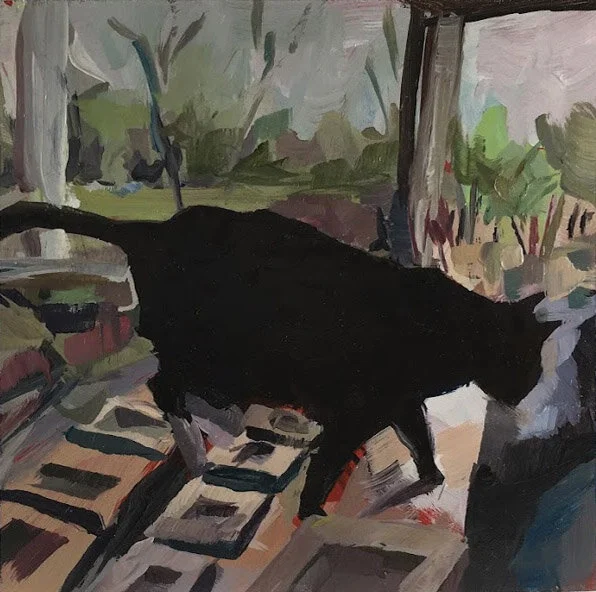
Cost and uncertainty discouraging you? Recently I sent in work to a gallery I admire. I chose two pieces from a series of four. At the last minute, I added the piece above -much simpler than the other two. That’s the piece that got in.
Yes, rejection stings, but wow it feels good when they choose your work to show. It’s worth the try.
three guarantees:
I’ve been juror, gallery crew, and applicant. Here are three things I guarantee:
Your work will be seen. When you apply, other artists see your best work. Even though brief, that attention can plant a seed for connection later on. If you do get in, your work will be seen by folks who care about the arts. Buyers. Artists. Gallery owners. Your application is a chance for connection. One way to choose shows is to look at the juror and/or the venue. Are these people who’s opinion you value? Is this a venue you’d like to work with? Does it draw an audience who’s appreciate your work? Compared to likely submissions, would you work stand out in a good way?
Your application supports the arts. Galleries pay rent, insurance, and electricity just like you. They also pay the juror and maybe even the staff. Especially now, with foot traffic so starkly reduced, your application votes “YES” for the venue’s continuation. If they are non-profits, you might even take your application fee as a tax deduction, if your work does not get in.
Your photos help you. Some folks document their work regularly. Me, I struggle with photography. A show application kicks me to take good photos and file them properly. So even if you don’t get in, you gain a record of your best work. These photos make you a stronger professional. Post them to your followers. Share them on Instagram. Make cards or print. Post the originals for sale. More power to you.
Three crucial Steps
Take your best shot. Every photo you submit should show the work at its best. No hot spots. No fuzzy focus. Shoot a lot of images, checking focus and shifting the lighting. Position 2-D work parallel to the camera lens. No frame, reflections, or backgrounds. After you shoots, check the results on your computer. Mine often need a tweak to square up or correct the lighting. If you are submitting 3-D work, you’ll need a neutral background.
Craft your application. When you can, submit multiple pieces. Present a strong visual story, and you increase the time the jury spends with your work. That added time increases the chances your work gets into their show. So assemble a set that coheres in subject and style.
Follow the instructions. You’d be amazed at how easy it is to slip up. I almost sent minuscule files the other week because I misread “larger than [size]” as “not larger than [size],” because that was the phrasing in an earlier application. All those details. So: your work must match the show’s theme. It must meet the venue’s requirements for size, materials, and display. Check your calendar: can you and your artwork meet the delivery and pickup dates? (I was with one curator when he learned that an artist had double-booked her accepted piece, and offered to send similar work. He was not pleased.) Finally, prepare your submission with the exact file size and file name specified. Send an email if something is unclear.


For a recent application I “auditioned” several painting. These three shared share size, structure, and color themes, so I chose them. Two got in.
Four things to remember
So off your application goes. What next?
Keep track. Note in your work calendar when the acceptance list is posted. You might also pencil in the show’s dates, so you can be sure to keep the work free until you hear if it is in.
Be on time. You could disqualify your work by missing the drop-off. Plus, showing up as promised is the just right thing to do.
Say thank you. Mom was right: politeness matters. The gallery is made up of people, who worked hard for you. Be nice when you meet them. Write your thanks down, afterward, on a real card, and put it in the mail.
Move on. Each show requires coordination of a many parts. Balance, variety, and tone all come into play. The cohesion of the whole outweighs the value of any one piece. If you get in, be glad you are part of an ensemble. Didn’t get in? Feel the sting and let it go. (You’ve got those good photos, now.) For extra credit: come to the reception. Say nice things about the show.
As Alice Sheridan would say, it’s all about leaving breadcrumbs. As a artist, you need to increase the odds someone who likes your work will find you. Each show application offers you the chance to make contact. It puts your work in front of a jury. Acceptance widens your audience. You want your work seen by others who care about the arts. So, create that potential. Reach out. Apply. And good luck.

Studio Assistant. 6” x 6” acrylic on hardboard. March image for the Concord Art Association 2021 Calendar.
Slow Down
A new class teaches me the value of slowing down.

Take your time
A new lesson for me.
All my life I’ve gotten into trouble for moving too fast. Bent fenders (where did that parked car come from?) and bad dinners (a cup and a half is not the same as half a cup), a trail of mistakes in my wake.
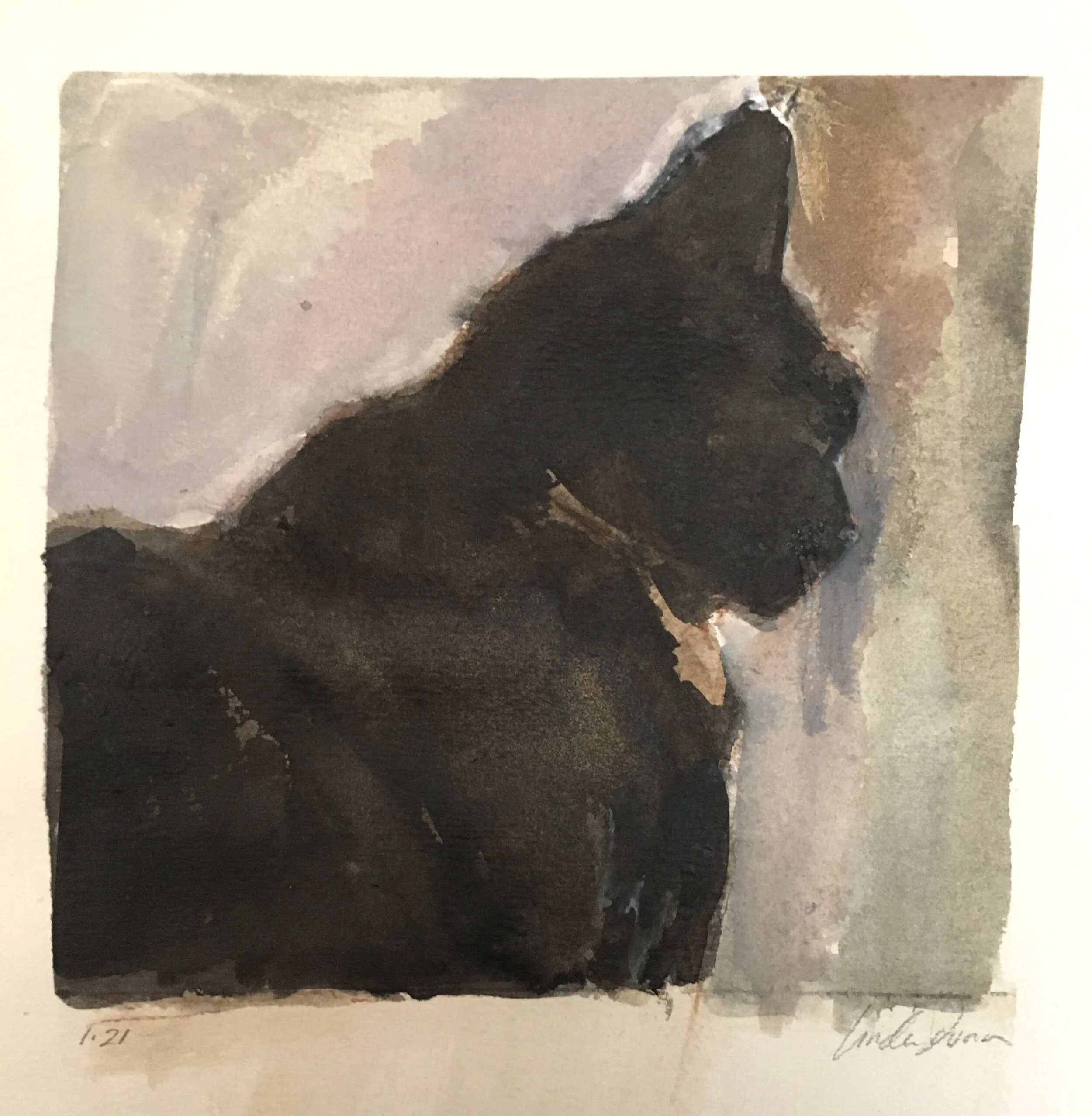
Now I’m taking a class that insists I slow down. The teacher, Emily Hirtle, urges us to repeat our attempts. We redraw, edit, repeat, not in search of variety, but instead to land more nearly on our target. This is new for me: accuracy as a tool for expression. My background is a mixed-bag of surface design and drawing classes. Always emphasis on moving ahead. Now, instead of barreling forward, I’m asked to stop, repeat, revise.I even used my ancient copy of Photoshop to check my sketches against the original image.

checking the line drawing with Photoshop
This class is a lesson for me on the fruits of slowing down. Each iteration is a closer approximation of what I am trying to say. With humility, I can calm that fuss-brain down and learn.

In progress - that point where I stop and think again
There’s a peace in the process when you don’t rush. Plus, the results, with each iteration, improve.


I do believe these lessons will carry over into more abstract work. The point is care in investigation. “Make a mark and then sit on your hands,” Brian Rutenberg advises his students. I have been rushing forward. Time to slow down. Breathe. Try. Then try again.

Engine in the Air
We keep trying. Every painting a risk and an adventure. Keep pedaling.

Keep trying.
Move. Risk. Learn.
January’s past. Doesn’t New Year’s feel months ago? Eons even. Looking back at my work for Januarty, it seems simultaneously all over the place and focused on the same goal, with two directions dominant: move away from safe space, and get to the heart of what matters.
Working daily, with just yourself as motivator, feels hard sometimes, doesn’t it? Each day you need to muster discipline enough to do what it is you really want. Some days even chores feel easier. I believe that is because, when we sit down to make work, we face the unknown. We admit to the possibility of failure. We try, knowing that the ideal remains out of reach.
Never mind.

Winter geraniums. Acrylic on paper. Daily painting.
Look for what matters. Is it a memory? A feeling? How would you put it into words? Are there no words? Maybe that is the place to start. Ask yourself: Why this flower or that vase? Look for expression in your lines, your brush marks, your colors – they are the speech you are given to use.
I have been rotating among three subjects: flowers (from memory), animals (from photos), and the idea of memory, in the form of a favorite photo from 25 years ago. At the top level the approach and the media are different – everything from literal representation to abstract form.

Well-earned nap. Acrylic on paper.
They meet in my heart though, for each is a search for the “Why?” of the subject. Each is a journey not only to become more competent, but more expressive.

Mother and child. Value study.
So, I research skeletons, shadows, and the planes of the face. I watch how other artists handle their brushes, and note the colors they use. Technique is one of the bones that support flesh of creation. Craft that supports expression. Then I push beyond what comes easy. Each painting, even of the same image, is a further journey. Do not repeat. Build.

Winter Warmth (in progress)
Annie Dillard has a lovely passage in the Writing Life about going to work as a writer/artist: “You enter your study, open the French doors, and slide your desk and chair out into the middle of the air.” It’s all risk. Glorious, wonder, impossible risk. This month, pushing myself, the phrase “out on limb” came to mind and it didn’t wasn’t enough. “Out in mid-air” was how I felt: Branches nearby but not I’m not holding on. So. “Get to work,” Annie writes. “Your work is to keep cranking the flywheel that turns the gears that spin the belt in the engine of belief that keeps you and your desk in mid air.”
Thee name of that first painting in this blog: Engine in the Air. And it sold. I’ll keep pedaling. You pedal too.
What Matters?
why make art when the world feels on fire?

Attention
matters. So does art.
This week: Professional membership group urges me to set goals for new year. Meanwhile I attend my first Zoom funeral, watch a mob invade my Capitol, and learn we are on course for half a million COVID dead by spring. I make tea, paint, and put out more seed for the birds.
Wednesday started with a flash of joy: Rev Warnock, John Lewis’ pastor had been elected to represent Georgia in the Senate, the first African American to do so. John Ossoff seemed headed to join him.
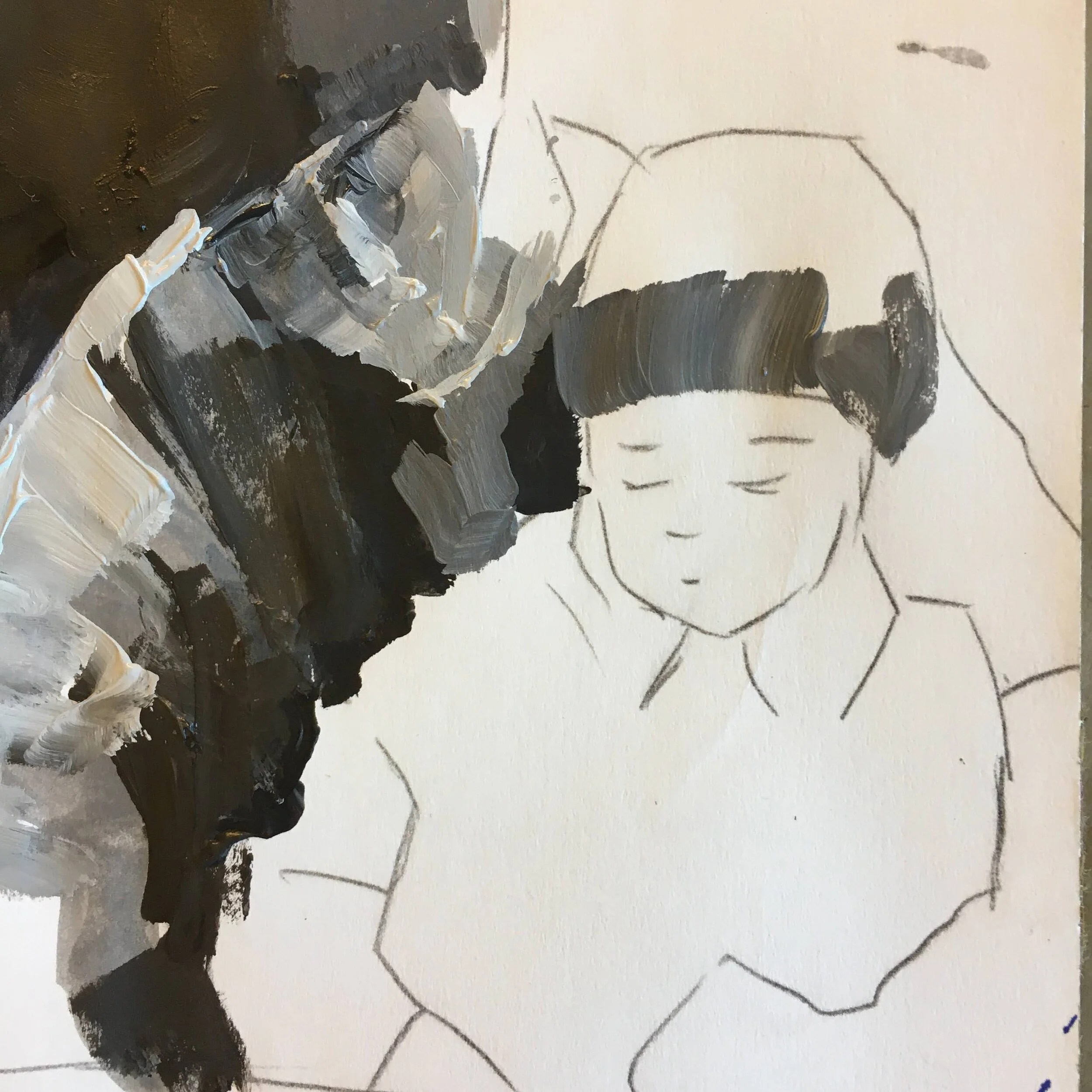
These lifted my heart because I had found much-needed focus in making cards for these campaigns. My mother-in-law was dying far way. COVID meant my husband traveled alone to be with her. In the empty house, I made 70 altogether, each one a hand-made collage with a hand-written note inside saying, your voice matters. You matter. You deserve to heard.

cards for Georgia
Like so much of my art, these cards were also a call to my own soul: you matter. Keep trying. So, this news brought me joy, even while I braced for the theater of GOP slow-down of the ceremonial acceptance of the Electoral College votes.
You know what came next. The rally with its invitation to combat. The march. The invasion. From lies and disrespect to desecration, violence, death. (Not as much as some planned. Left behind were Molotov cocktails with home-made napalm, pipe bombs with timers, and zip-tie restraints.) All because of a four-year campaign against truth, the news, the courts, the scientists, the doctors, and anyone who doesn’t vote or look like the team that lost the election.
And then they walked away.
I don’t usually litter my blog posts with links but it is important right now to point to facts. White people were allowed to carry on like hooligans or worse, and walk away. (May I never see that smug guy with the naked chest and horned headgear again.) I have been hypnotized by Twitter, not so much “doom-scrolling” as longing for someone, anyone, to help me to articulate what I am seeing and feeling.
“What a staggering, heartbreaking week,” writes Molly McKew. Like her,
“I am haunted by the deeper meaning [and] left angry — so furious it’s almost blinding at times…Furious this is where we are, and that from here anyone — anyone — still minimizes what it is. It’s not over. I wish I could say it was. We will all be tested in how we react in coming weeks. Beyond.”
I talk for hours with my daughter. She’s a PhD candidate in US History. We sort through what we’ve heard, and measure it against what she knows, try to asses what happened and why. We each try to see how our life and our work fit into the larger work that these events call for. We talk about white supremacy and the inheritance of capitalism and privilege.
How can it be that $100 donation retires $100,000 in medical debt? How can the Dow hit a record along with the need at food banks?
From the small place where we each stand, how do we work for what matters?
****
Because of New Year’s, my in-box is filled with advice about planning for business success. It all feels so damn trivial. Wrong. Then I remember, I can think that because good luck and being white brought me safety nets. So much can be traced, if you look at through the lens of history, to opportunities offered to generations before me, and so to me.
Now: what to do? My art is not political. It doesn’t make millions to give away. Can I make difference just by making and teaching art in these times?
Maybe so.
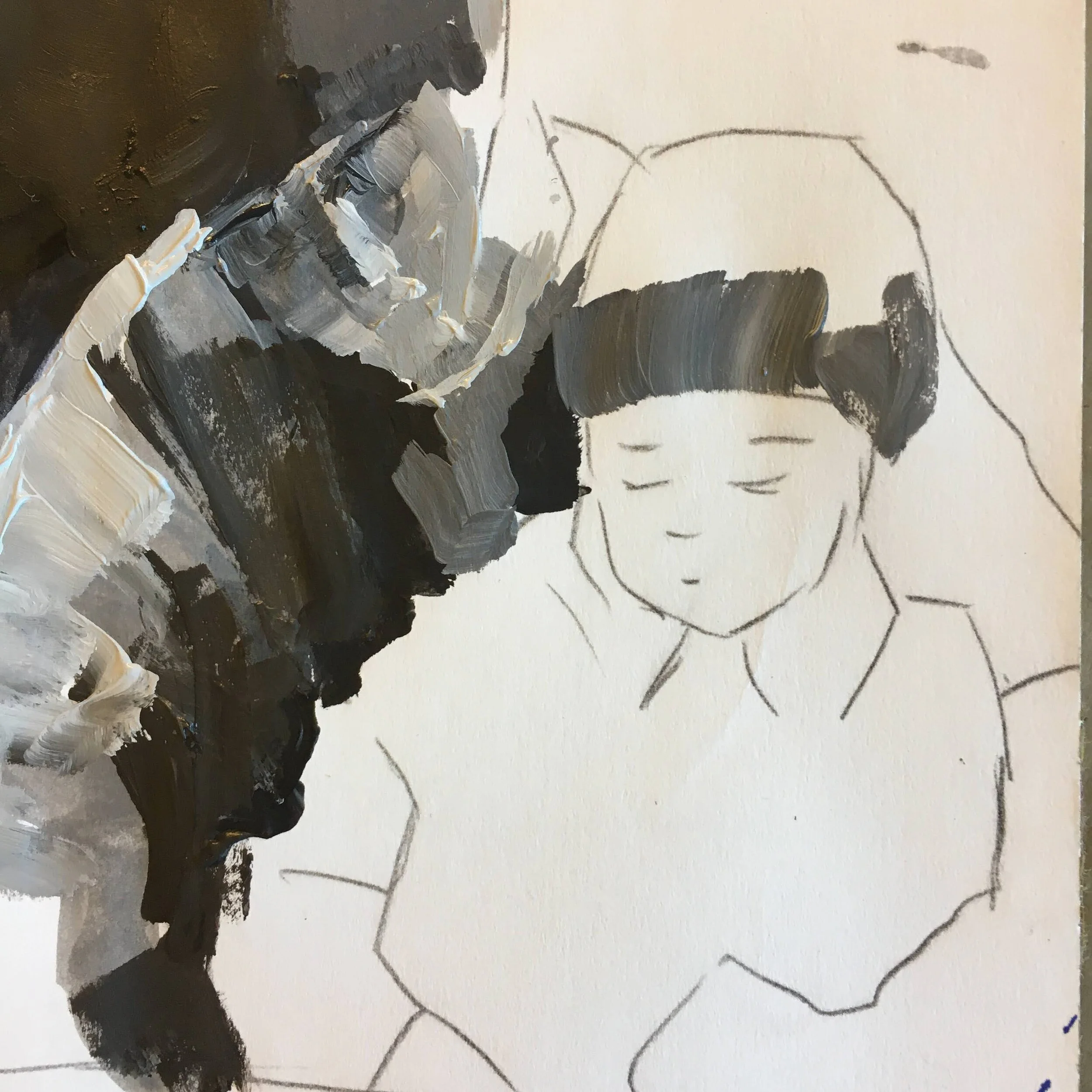
Mother and child, study #4
Art is life singing. I believe anyone who makes art, who wants to create, wants to speak from their heart about what they see, what they feel and what they care about, right now. You love your materials, your subject matter. You want to show why they matter. “You were put here for this, to give voice to your astonishment,” writes Annie Dillard. When we paint, when we teach and encourage others to create, we are, I think, creating some of that elusive stuff that makes life a miracle worth living.
We artists are seers. We see what’s possible where others see only the everyday. We call out meaning. We make vision last instead of letting it slip away. “Every one of you has a collection of stuff at home that other people think is trash,” one teacher announced. (“How did she know?” I wondered.) “That’s because you are an artist. Your job is saving the over-looked. Transform it, until you make it possible for them to see why it matters.”
I believe we all have the need to be seen, to matter. I believe that many of us long to make ourselves visible by making art. We transform line and color into the something that expresses us – our emotions, our loves. We say “I saw this. This is how it felt to me.” We swim in the imperfect but we dream in the ideal. “Sure, the paintings fail miserably. But what else can artists do but try?” writes Sarah Swan, “The real art is our collective, undaunted, efforts.”
Remember that. The brevity and the gift. Be generous. Be brave. Be loving. Right now. Art is about the fact of seeing: seeing each other, letting other see us, frail and overwhelmed as we may sometimes feel. We have work to do. We will need each other. “It’s rough right now friends,” Crystal Marie Neubauer writes:
“We are witnessing the last desperate gasps of a dying ideology of whiteness. To look forward to a better future, we can in no way return to the status quo of the past. It simply cannot be the cure to our hurting country to say “let’s get back to normal” when normal was anything but just for us all. 2020, in the best possible sense, opened our eyes to the hidden evils and the lies that have been allowed to operate in this country for so long…[but] you are not the only one holding the fate of the world upon your shoulders.”
We move the weight together, one baby step at a time. Catch your breath. Ask yourself what matters. Keep trying. Make yourself a hot beverage; call a friend. And remember to feed the birds.

My Christmas present - these little ones will see me through.
Sign up for art tips and studio news:


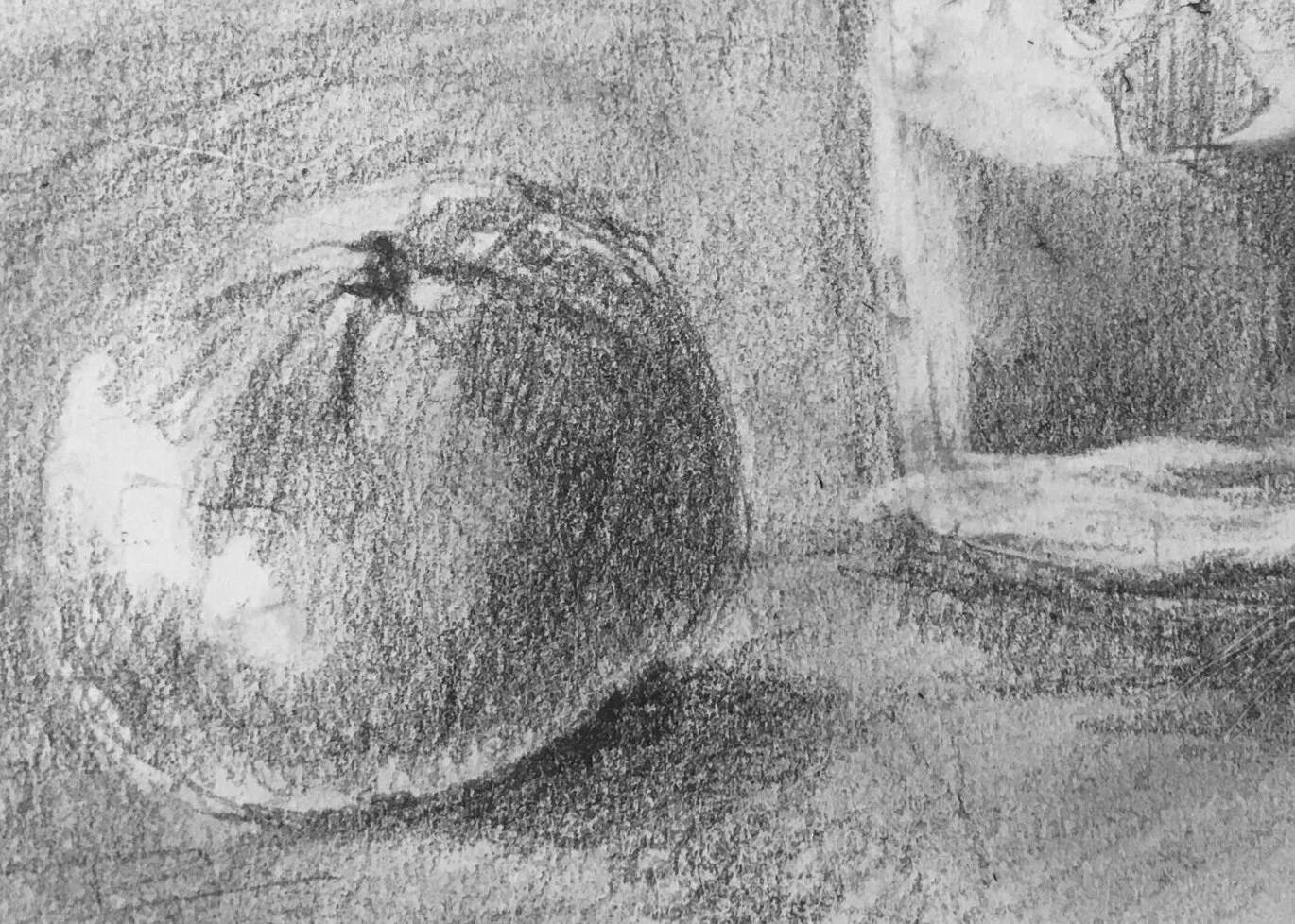
When an image grabs you and won’t let go….