Live the questions now.
-Rilke
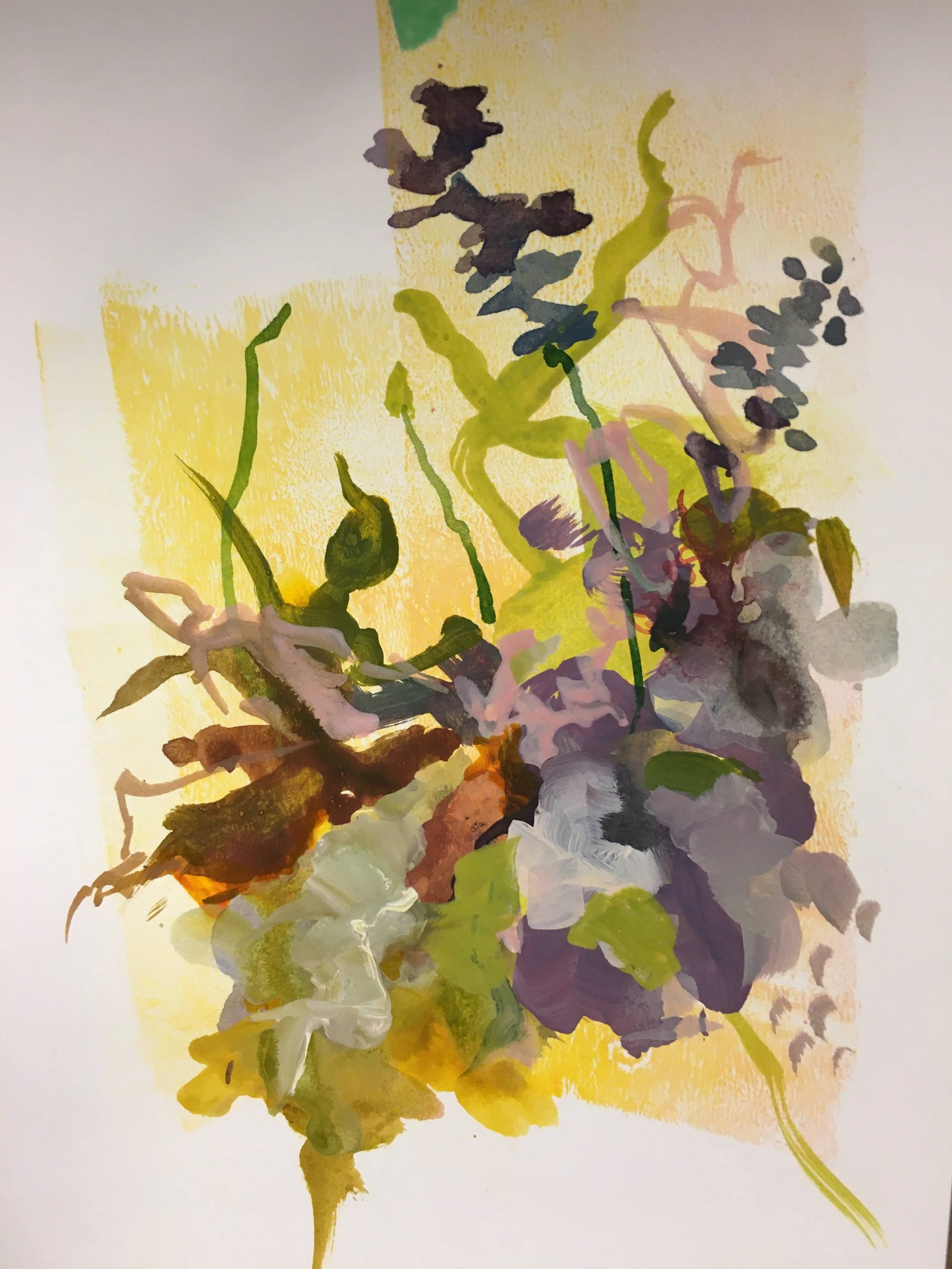
Step Forward
You may feel like you don’t know where you’re going, but you are on a path.
“Painting is like an endless question-and-answer session. Each stroke is followed by a question; the next stroke is the answer.” -Mitchell Albala
Sometimes making art feels more like walking the wilderness without a good map. Infinite temptations in a vast space. Is that the path? How to know? Each step forward we feel our way, looking for the next steady place to stand, reorienting our self to the what light we can see.
This month I (finally) read Cheryl Strayed’s Wild. If you’ve read the book or seen the movie, you know she took a near-breakdown and put herself to the task of walking the Pacific Coast Trail, alone. In Wild, we travel with her through this miles-long journey, and through the grief of her fractured past.
Strayed writes courageously of not-knowing, of the journey taken up in ignorance, desperation, and hope. She lays out the parallels between walking alone and living your life. It’s all a journey. Risk and trust and sometimes good luck make it worthwhile. Her journey leaves her stronger in spirit as well as body. When she is about the to finish, she realizes
“I didn’t feel like a big fat idiot anymore. And I didn’t feel like a hard-ass Amazonian queen. I felt fierce and humble and gathered up inside, like I was safe in this world.”
An individual painting, assignment, or technique may make you feel like “a big fat idiot” but don’t let it be the boss. Put it aside, refresh your energy with sketches. Mix color swatches. Paint some papers for collage. Then try again.
Trust me, your brain will have been working on the problem while you looked away. Solutions are in reach. The painting may not be a bad as you thought. An answer is just around the corner.
I believe that making art can make us feel “gathered up inside.” Even the smallest project can soothe and restore. So, get out your art supplies. Draw a shoe, a plant, the view out your window. Paint. Paint again. As the poet Basho wrote, “Every day is a journey, and the journey itself is home.”
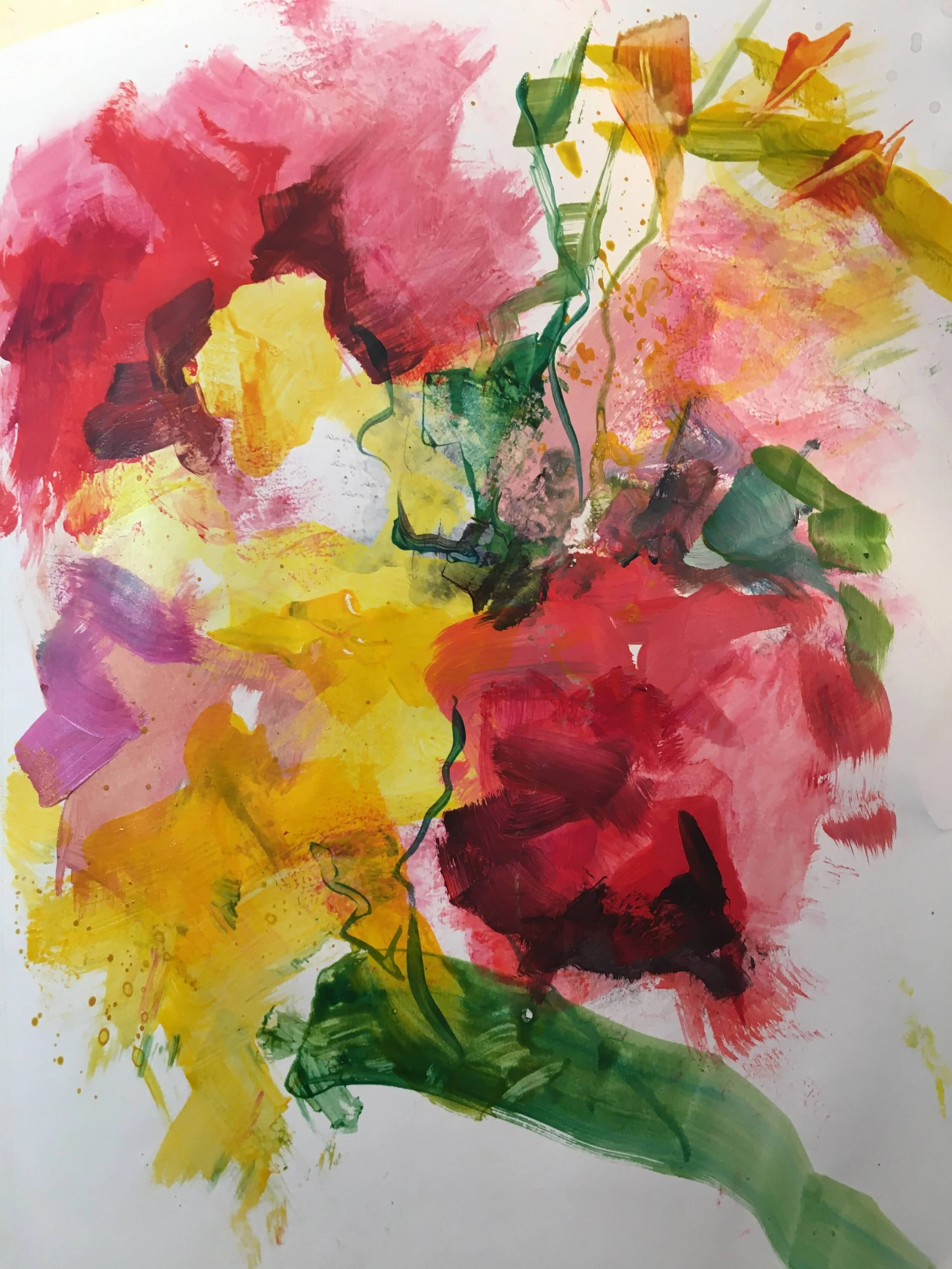
Art is a process
The more I paint, the more I realize that the best work occurs when I am *almost* not looking. I slow down, wait between brush strokes. Not thinking so much as listening. The approach is one of questions instead of goals. Don’t let doubt be the boss.
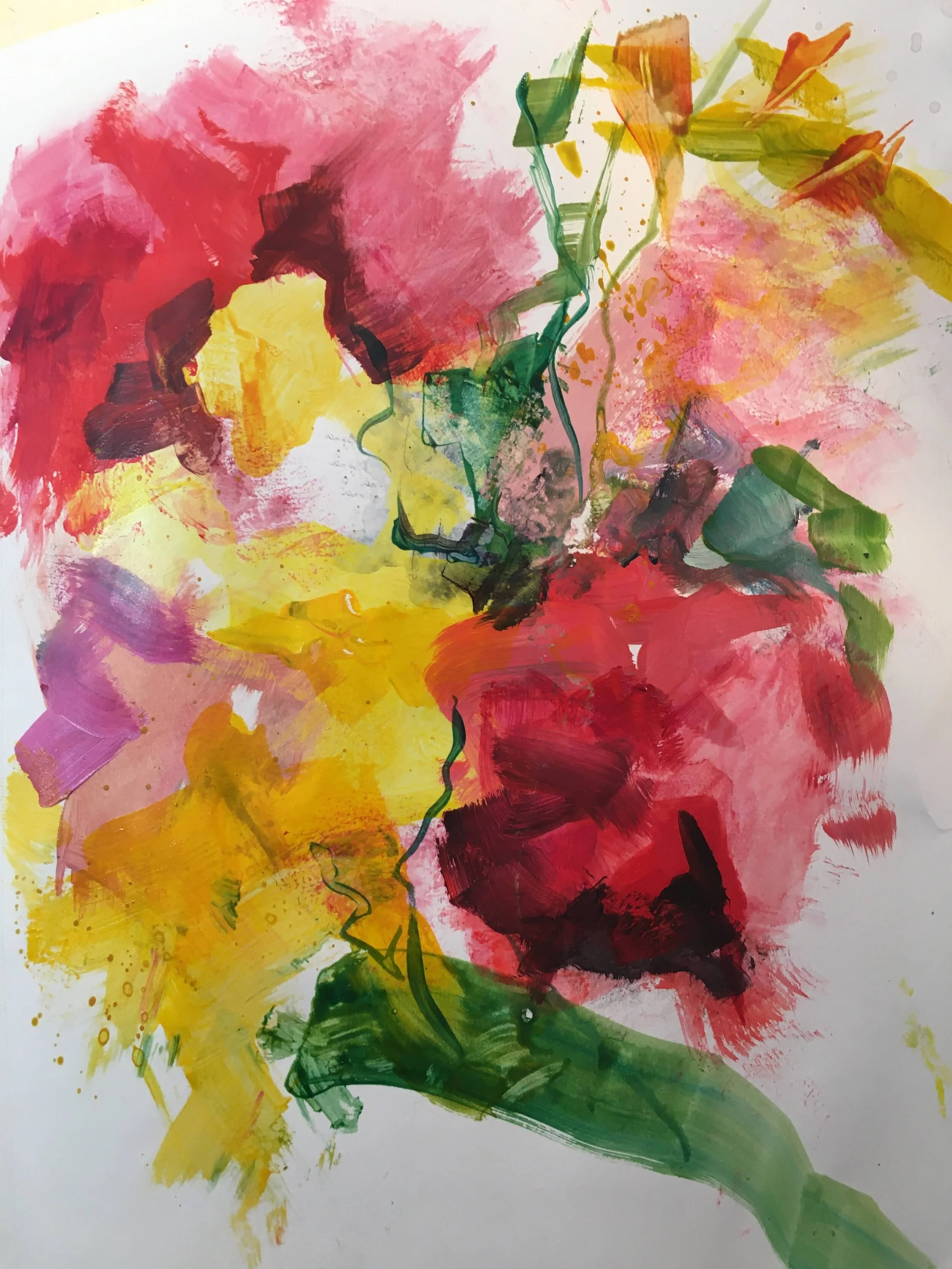
Making art is a Journey
you are on the right path
You’ve heard that so many times, but what does that mean? The words never meant much to me. Surely there is an answer, I used to think, a way, a set of directions that followed would lead to success. Do you feel frustrated that your drawings don’t come out “right”? that your paintings don’t match the passions you want to express? Maybe you feel if you just had more, well, something: time, knowledge, talent, your art would be better.
Frustrated? Give yourself a break.
Your very frustration tells me you care, that you are trying. I can assure you: caring matters. It matters so much more than whether this stroke works or that color is right. Caring is the first step. It is also the energy that keeps you going. You are already an artist, you know, because you care. (Think of all the people you know who don’t paint, draw, try…) Any “failed” work is not failure, it’s practice.
Achievement by definition takes practice, work, time. Think sports. Think music. Heck, think dentistry or hair-cutting. Cutting my own hair during lockdown has given me a keen appreciation for how much my hairdresser knows that remains a mystery to me. Likewise, what you learn, each time you try, will remain unexplored by most of the human race. As an artist, you are an explorer. You are finding your way.
Improvement comes with in small steps, made over the course of hours. Most of the time, you do not see progress as you work. You may not even see it when you look back - not one day, one week, or even one month later. But pick up your sketch book from five years ago, and you’ll know: all that time you felt you struggled, you were growing. You are getting better all the time. Maybe you didn’t yet “get there” but you are getting somewhere, for sure.
Years into art making I now realize that arrival is not the point. Yes, you may have a class assignment to fill, or you want to have work ready for a show. These are pauses along the way. But arrival? It never happens. We keep working, keep trying to reach that next step. Come to think of it, if we could arrive, if the work did come easily, we might just get bored. Instead, perhaps the joy is the work: the search, the trying, they are as much the point as the finished art. We wrestle and wonder and try again. Art is work. It’s work we love. Let’s try a new metaphor. Painting is a dance.
Join the Dance
Like dancers moving in pattern, art-making is a constant trade of energy among the elements that art requires. Your eye examines your source. Your brain responds to your eye and guides your hand. You alternate between knowledge and feeling. Your heart/soul speaks up. You try, first one possibility, then another, as you seek a rhythm of color, line, and mass which will move the viewer towards the truth you want to convey.
As you paint, your attention constantly alternates, between the eye and the hand, between the analytical and the felt, between what you know and what you hope to discover. In front of you is a photo, or a landscape, or an object. To paint a subject is to have your attention in constant motion, from your source to the painting and back again.
Zone/Zen
A painting is a transfer of energy, from your love of the world, to the world of the canvas, and so to the viewer. A painting can feel like a story when you look at it, but the story behind its creation is often so different from the effect that the finished piece gives.
The more I paint, the more I realize that the best work occurs when I am *almost* not looking. I slow down, wait between brush strokes. Not thinking so much as listening. The approach is one of questions instead of goals. Even more that the object or view, the subject is the painting. The painting is, after all, just one color juxtaposed or superimposed on the next.
“What color does this need?” “How is that shape working?” “Is the contrast great enough? Too much?” “Where does the eye need to move?” The dialog comes and goes in my head. Then, a brush stroke is made. The process is like I imagine sky-diving. Lots of practice on the ground: drawing, color swatches, value studies. Then, once in motion, double check your target, and jump. Suddenly there’s wind and infinite chance. Move with courage but listen to your surroundings. Trust what you know and ask what is needed next.

Step forward
even if you don’t know where you’re going
“Painting is like an endless question-and-answer session. Each stroke is followed by a question; the next stroke is the answer.” -Mitchell Albala
Sometimes making art feels more like walking the wilderness without a good map. Infinite temptations in a vast space. Is that the path? How to know? Each step forward we feel our way, looking for the next steady place to stand, reorienting our self to the what light we can see.
This month I (finally) read Cheryl Strayed’s Wild. If you’ve read the book or seen the movie, you know she took a near-breakdown and put herself to the task of walking the Pacific Coast Trail, alone. In Wild, we travel with her through this miles-long journey, and through the grief of her fractured past.
Strayed writes courageously of not-knowing, of the journey taken up in ignorance, desperation, and hope. She lays out the parallels between walking alone and living your life. It’s all a journey. Risk and trust and sometimes good luck make it worthwhile. Her journey leaves her stronger in spirit as well as body. When she is about the to finish, she realizes
“I didn’t feel like a big fat idiot anymore. And I didn’t feel like a hard-ass Amazonian queen. I felt fierce and humble and gathered up inside, like I was safe in this world.”
An individual painting, assignment, or technique may make you feel like “a big fat idiot” but don’t let it be the boss. Put it aside, refresh your energy with sketches. Mix color swatches. Paint some papers for collage. Then try again.
Trust me, your brain will have been working on the problem while you looked away. Solutions are in reach. The painting may not be a bad as you thought. An answer is just around the corner.
I believe that making art can make us feel “gathered up inside.” Even the smallest project can soothe and restore. So, get out your art supplies. Draw a shoe, a plant, the view out your window. Paint. Paint again. As the poet Basho wrote, “Every day is a journey, and the journey itself is home.”
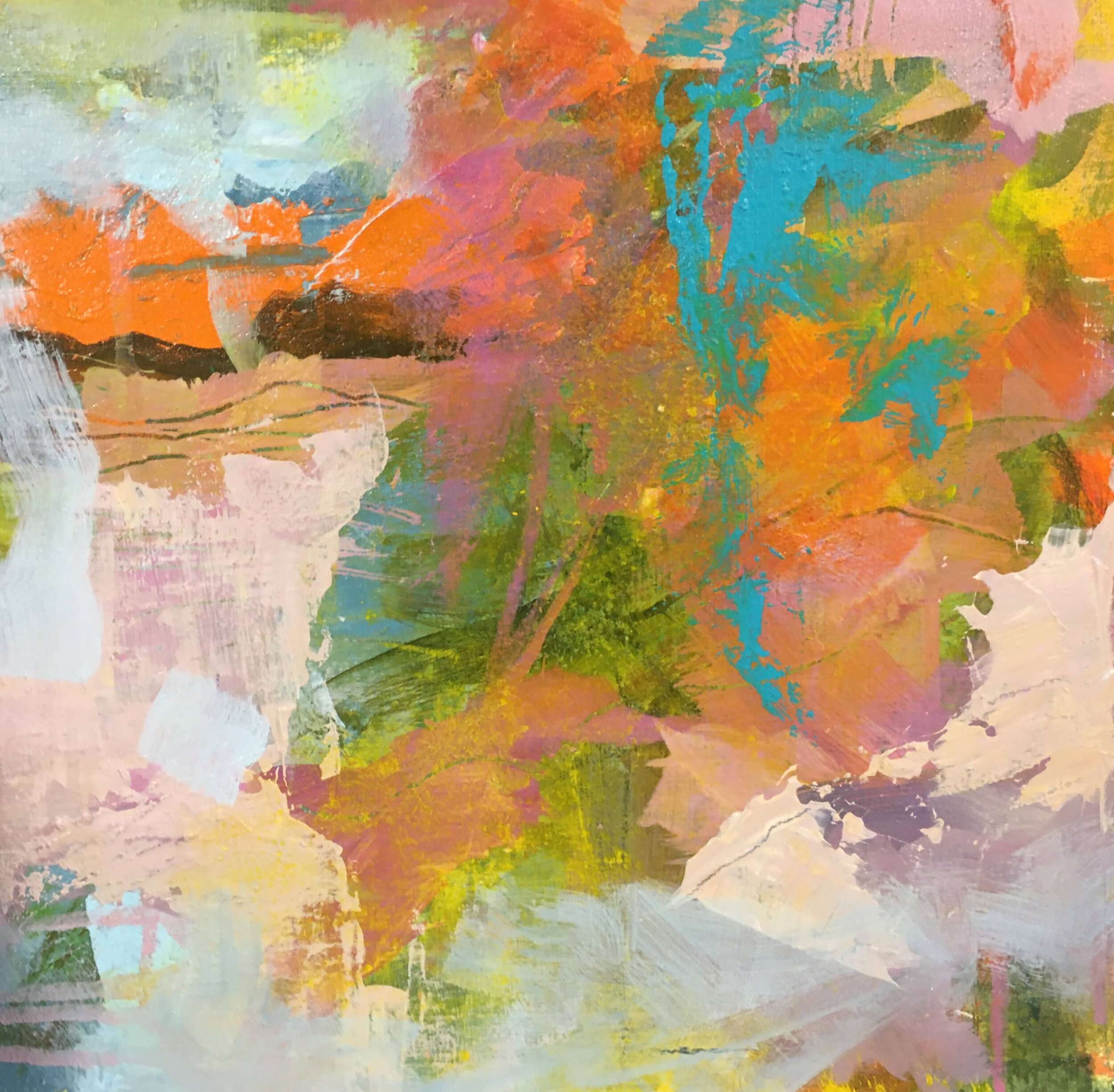
The hardest work: Showing up
Art work is hard work. Keep showing up and something good will happen.

Art-making is a mystery. Keep trying.
“What is the hardest part of your workout?” - Radio interviewer, to world-champion weight lifter. “Getting through the gym door.”
I think of this woman often, every time I find it hard to get “back in the saddle” after time away from my art.
We can find so many reasons not to work. Time. Space. Money. Life. The most pernicious perhaps is the voice that says “you’re no good.” My students wonder why keep trying? My own monkey-mind chatters about chores to do and classes to take. Don’t you wish you could teach that voice to be encouraging instead?
I had one student who insisted “I haven’t got any talent. YOU’ve got talent,” after every class. Another always sighed at the end of class: “I don’t know.” We were raised, it seems, on the myth that “talent” creates the piece. We were fed a story, where the genius (male) strides like a colossus, dominating the studio, lab, or workplace, and fearlessly creates success.
Let the myth go. It makes a good movie, but it’s not a good model.
When we make art, we engage in mystery. We also engage in hard work. There’s a reason you feel tired after a life-drawing class. Art is discovery, a continual process of engagement, questioning, and seeking answers. Show up, do the work, and you will make discoveries, too.
Go, not knowing where…
Russian proverb
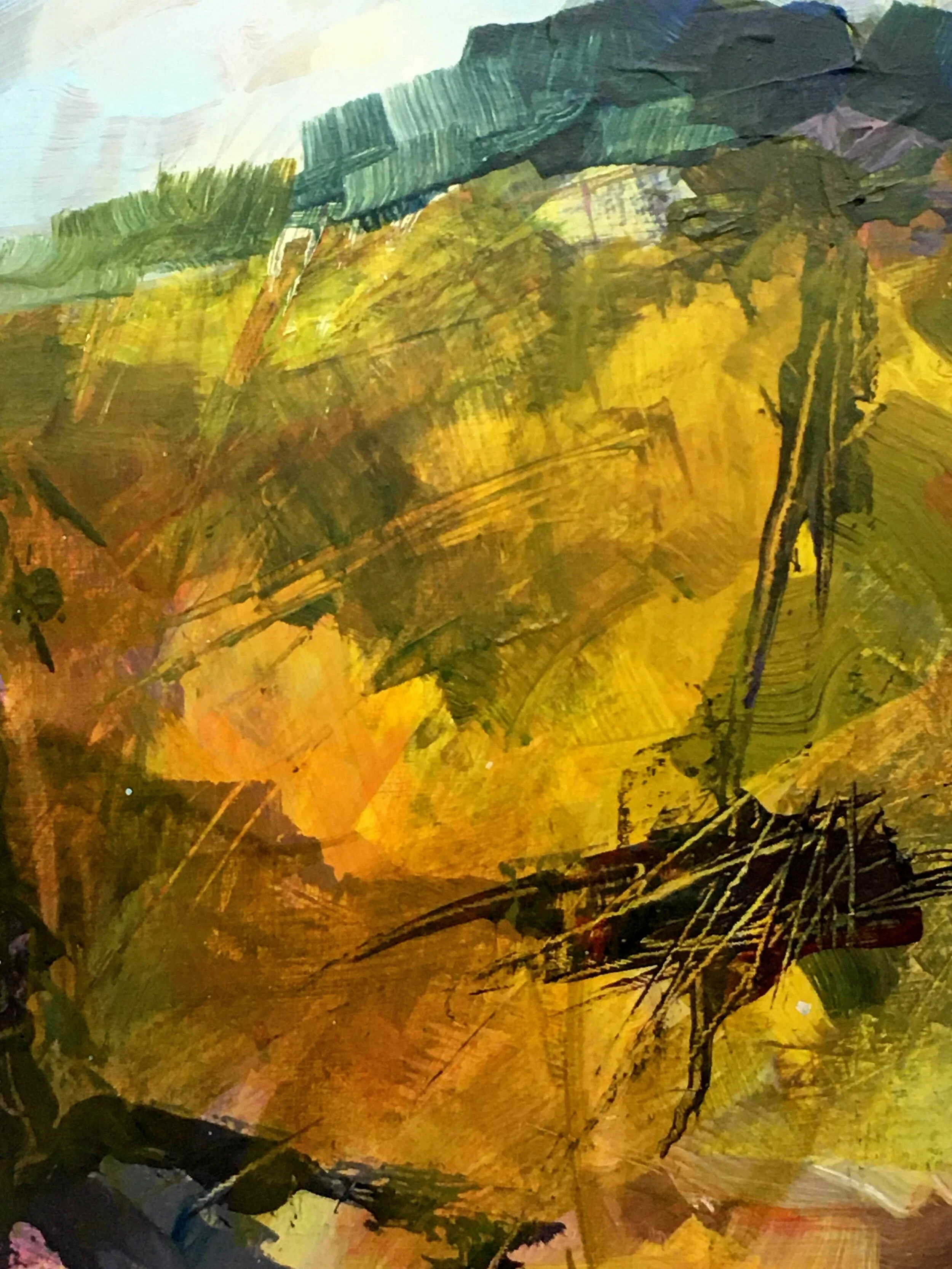
For me, art is a constant experience of treading into the unknown. Inchoate feeling rolls through me – joy, loss, anger, love – but how to translate these feelings into color, shape and line? The only path I know is show up and try. Make the ugly starts. Walk away. Come back. Try again. “Butt in chair,” writes Ann Lamott. Do the bad work. Then the good work begins.
Creating a room of your own helps. Maybe it’s an unused closet, a nook under the stairs, or a corner of the kitchen, but a place where your work and your tools can stay out, inviting you back, is a huge step towards creating the work you dream about. This summer I left my huge studio in Lowell for a small back bedroom. After much unboxing and sorting, tools are finally arranged on shelves and paints stand ready next to a work table, elevated on risers so I can work standing (and also so I can store more underneath). An easel on that table and another to the left, artwork rotating from them to the floor and back again, so I can work in a series.
At the end of September, I spent a full week framing up my landscape series, Here/Now, to hang at the Loading Dock Gallery. Then computer and bookkeeping issues ate up days, with a few hair-raising technical difficulties in the mix. Now comes the hard but joyous work of starting art-making again. Time to give myself over to the blank page, the unmixed colors, the infinite possibility. Inspired in part by a class I’m working through on-line, I’ve started a new series about the flowers rioting in autumn golds and purples on my back porch. They cheered me all summer. The bees knit amongst their blossoms in the July heat. In August, the sunflowers went to seed, and the finches and woodpeckers became our friends. Now the marigolds are in full bloom, still beautiful, but so soon to die. Something sweet and painful in that last intense beauty drives me. I don’t know where I’m going, but I’ve set out on the trip.
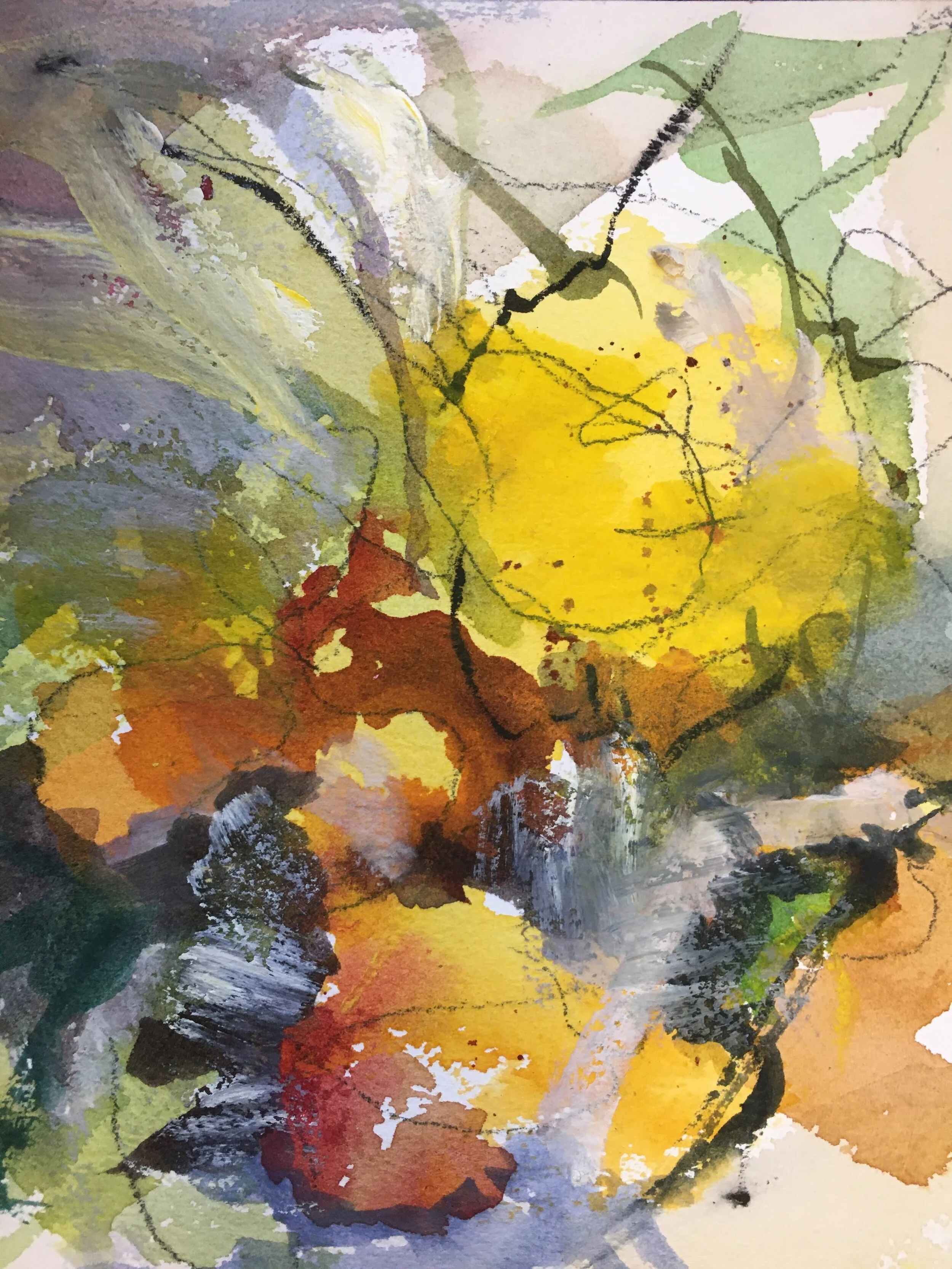
We are all such brief blossoms. Our souls are like studios, full of tools and possibilities. We need to step in each day, in spite of not-knowing. Pick up our brushes and try again.
Recently I sank into the quicksand of “You Should!” advice from the internet. A project I budgeted an hour for took two, then three, then a day then more. Shot through it were news reports and email updates. Twitter and Facebook. You can probably guess: I was a mess after two days. And that first job? Still not done. I forgot to paint. COVID isolation has driven me to listen more to podcasts and watch more videos, but I find if I take in too much advice, I get cranky. The real learning comes only when you turn off all the voices, and pick up your tools. Mix some colors. See how they work. What do you like? Do more of that. What do you hate? Stop that right now. Ask yourself, why? Like a sailor, feel the wind and adjust your sails to pick up the breeze.
I’ve learned that ugly work happens before the good work comes. The biggest surprise for me , again and again, is how sustained effort improves results. (Shades of those scales my piano teacher mom had me practice every day.) Keep working, and the ugly transform into the purposeful, the effort lifts to achievement. Often, I did not even see in happening.
Try working regularly on multiple efforts. Make a mark, a little progress. Stop after any change and turn to another piece. That pause between layers, to let them settle physically and also in your mind. Give the questions a rest before you judge. The best can happen if you act with confidence, then step away. Layers build. Each informs the next. The ugly will underlie and support the good, enriching your work. I now think of those first marks like leaves gathered up for compost. They are the ground, the soil that the work, still unseen, will take root in. The random first moves become energy I push against, overlay, and redirect.
Painting is like judo. Don’t force it. Respond. Identify what you like. Relax. Move with the piece towards what you love. Let the energy of what inspires you and what has appeared on the page steer you through the next marks you put on the page.
Embrace not-knowing. Each work of art is an act of reinvention. Once you let go of fear, all sorts of new things can happen. Some are “junk,” some educational. Some familiar, some a surprise. If you just start, you won’t be bored. Study your subject. Watch your page. What lines can you use? What shapes emerge? Notice relationships of mass and colors, and how they change. Work on in multiples, so every piece has time to chill, and so you don’t freeze. You have so much to say. No one piece needs to carry it all. Enjoy the process. Find out where each piece wants to go. Think, feel, and it all will change. Celebrate what you discover. Extend it. If you show up, and do the ugly work, out of the unknown something you want will emerge. It is a miracle, every time.

Five (Small) Steps to Stay Sane
Take these small steps to get your art practice back on track.
Observe. Listen. Breathe. Repeat.
Are you bogged down? Maybe you are a creative who wonders where the creativity has gone. I know how you feel. COVID flipped the script six months ago. In truth, at some point in the past half year (maybe right now) everyone has felt frustrated, stymied, even lost. I think we need to talk.
Now, in the New Normal, life is like surfing the waves. We get thrown. We climb back up. We try again. Education at home, work on-line, relatives at a distance. Yesterday I opened up my old, twelve-month calendar and marveled: all those commitments, those plans, gone overnight. What a crazy year.
Perhaps you long to get creative but life feels too insane, or your too tired. You keep thinking you’ll start in a few minutes, then - boom - another hour has gone by. Dinner still needs planning, another ten texts have dropped, a family member needs help. Or you just sunk another hour on the internet.
I hear you. I’m there, too. Sustained creativity is difficult right now.
So what to do?
One coach I know would say, like a stern nurse: “Stop it. Just stop it now.”
I say, Breathe.
Relax those shoulders. Stare out the window. Breathe.
There. That felt good, yes? Let’s do it again.
Humans weren’t designed to run 24/7. We need friends, family, and time to drift.
So yes, all that is harder, now, but it is still possible. You can make the time, at least some of it, richer, one baby step at a time:
Look out the window
Your eyes are a muscle. Decades ago, when I first began working on computers, I suddenly found I could not see long distances. When I went to the doctor, that’s what he said. “The eyes are a muscle. You need to exercise them too.” You may need to be on the computer long hours now, but stop to look far away. Extra soul-points if you look at something you love - trees, a bird feeder, the ocean - but even looking across the street will help your eyes, and so the rest of your body and your mind.
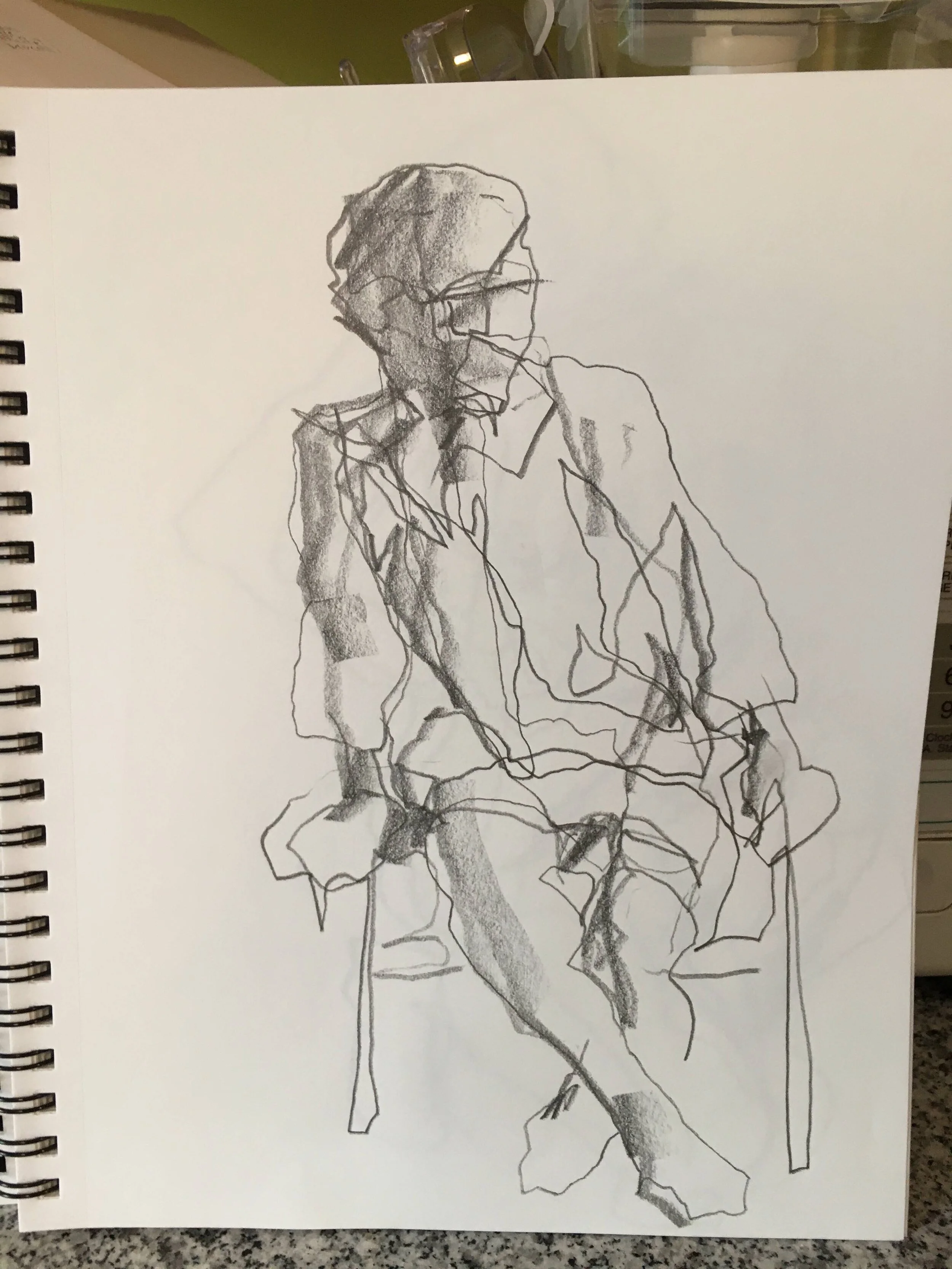
Draw
Observe for ten minutes.
Pick up that pencil
Don’t worry about talent or time. Just take a few minutes and draw. Set the alarm for ten minutes. Focus on something a mid-distance, place your pencil on a sheet of paper. Start the timer. Now, looking at your subject, imagine your pencil is an ant, walking the edge of your object. Slowly draw its edges. (Don’t look!) This is contour drawing. The results will make you laugh and yet they will also, remarkably, capture something essential about the thing you are looking at. Most importantly, you will feel: feel the pencil and how your arm moves from your shoulder, connecting your mind to your fingers to the pencil to the object that you see.
If you can spare another ten minutes, try again. Compare the results. Remember the feeling. Breathe.
Get outside
Don’t mind the time or the weather. You don’t have to hike the mountains or go for a run. Just get away for a few minutes. Sit on your porch if that’s all that’s possible. Go around the block. If you can, head further. Manufacture an errand that doesn’t use the car. My husband walks to the grocery store. I mail individual letters at the post box half a mile away. Make an excuse if you need one, but get outside. Humans were made for motion. We belong, at least part time, in the world alive with plants and other creatures. Even if we have to wear a mask to be there right now.
Travel in your mind
Ok, yes, a walk is good, but sometimes it just can’t happen. The weather is foul. Kids need a grownup around. Or your body just can’t manage.
Your mind can still travel. Bring nature into your home and embrace the journey. For me, the sound of wind in the trees and bird song is like a trip outside. (I use the recordings at MyNoise.net) For others, it’s the ocean, or peaceful music. Find what works for you. Open the window if you can. Set a timer, turn off the lights, silence the phone, and just be. Listen. Breathe. Let go.
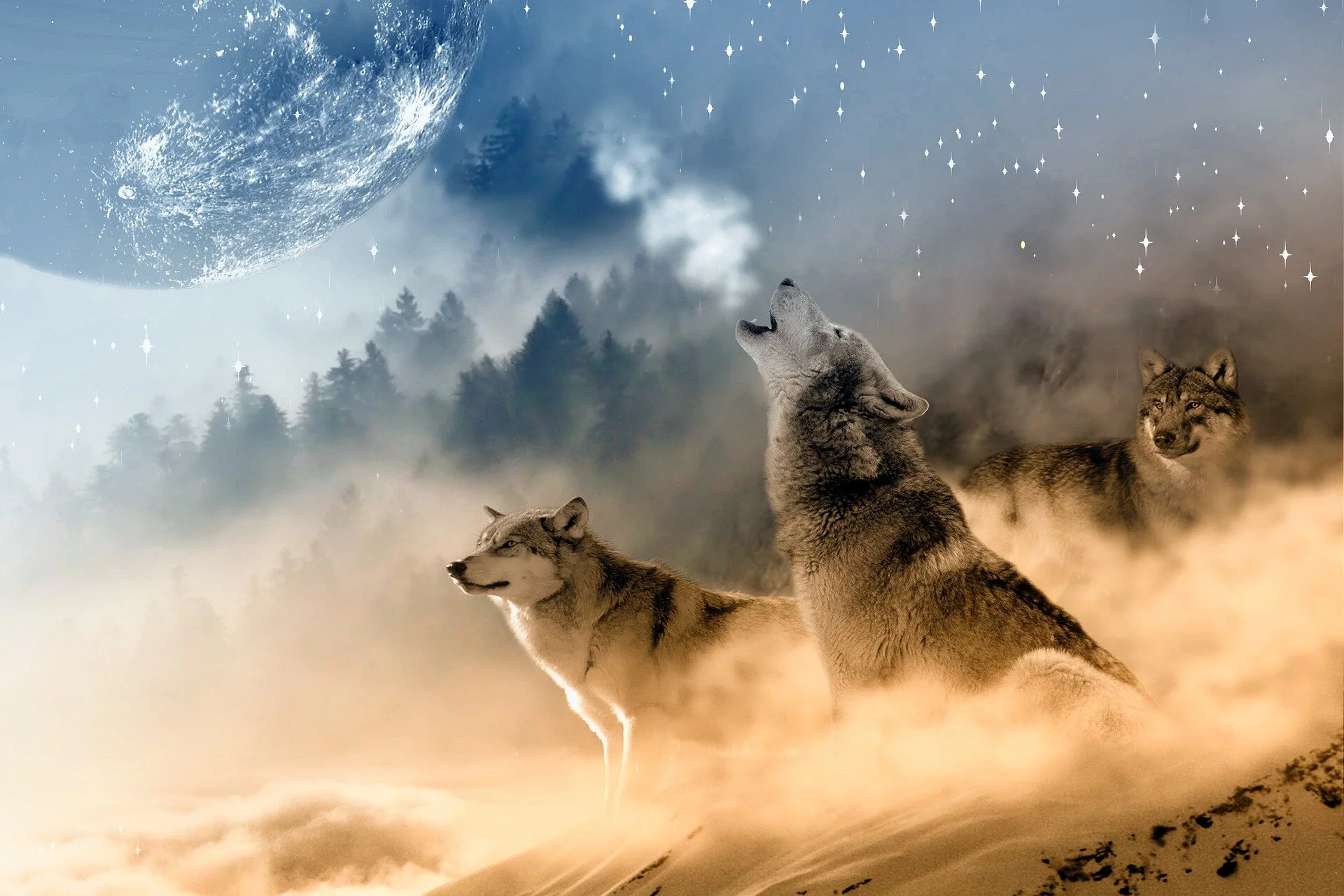
A favorite teacher told me this story: Once, one cold dark night, she went to visit her mom. When she got there, the windows were open, the lights were off. She feared the worst. When she walked in, though, her mom was fine. A fire burned in the fireplace, and her mom was wrapped in blankets, toasting bread and drinking tea. Wolf songs played on the stereo. “Sometimes we just have to get back to our roots,” mom explained.
I love that story.
Get back to your roots. If only for ten minutes, or an evening.
You’ll feel better when you come back. I guarantee.
Deep Water
Show up. Keep working. Even in hard times.
Show up
again and again
I am finding it hard to write in the wake of the news. You may well feel this too. What is the point, in the face of these times? To push paint around. Make, edit, try. I don’t know. I just know it is what I do. I show up. I try something. I try something else. I ask questions. Mistakes happen. Time passes. The work evolves.
I ride on the planet as it turns, and try through my art to make contact, to express joy, to offer a moment that may create another moment for someone else, somewhere in the infinite rotations of this world.
You may wonder how to move your own work forward as COVID strangeness drags on and the fall looms. Rule of thumb: first, show up. Wait for the right moment? Waste your time. “Butt in chair,” as Ann Lamott writes in Bird by Bird. Lousy first drafts. Pick up the pencil, doodle. Splash some paint. Keep going. Music helps. Or recordings of bird songs. Let other rhythms quiet the chattering brain. You are busy making art.
Then, take a break. Make a cup of tea. Sit and look at what you’ve done. Does any of it sing? What scrap, what gesture, what mark is worth saving? Focus on that. Do it again. Do it again, some more.
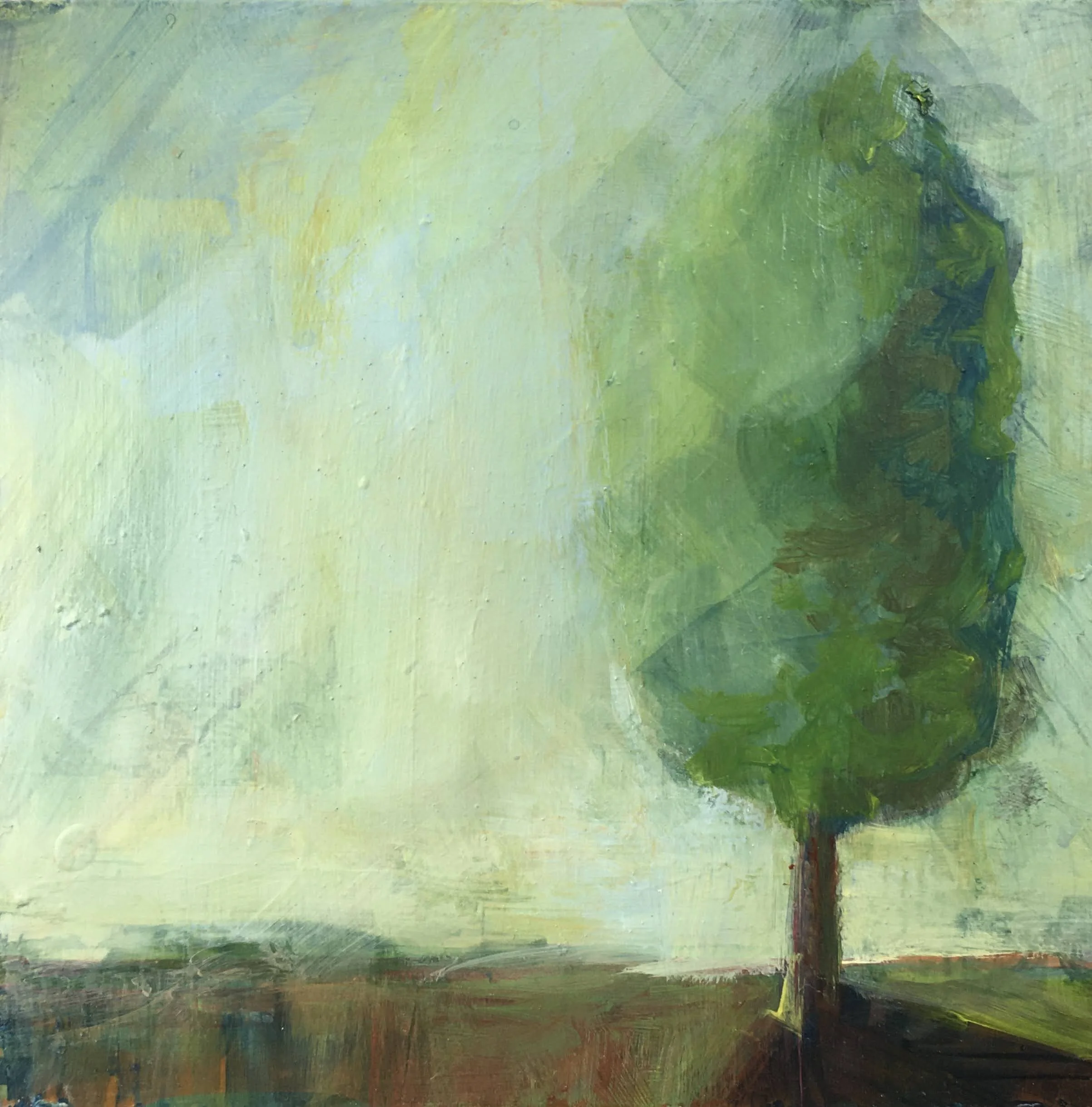
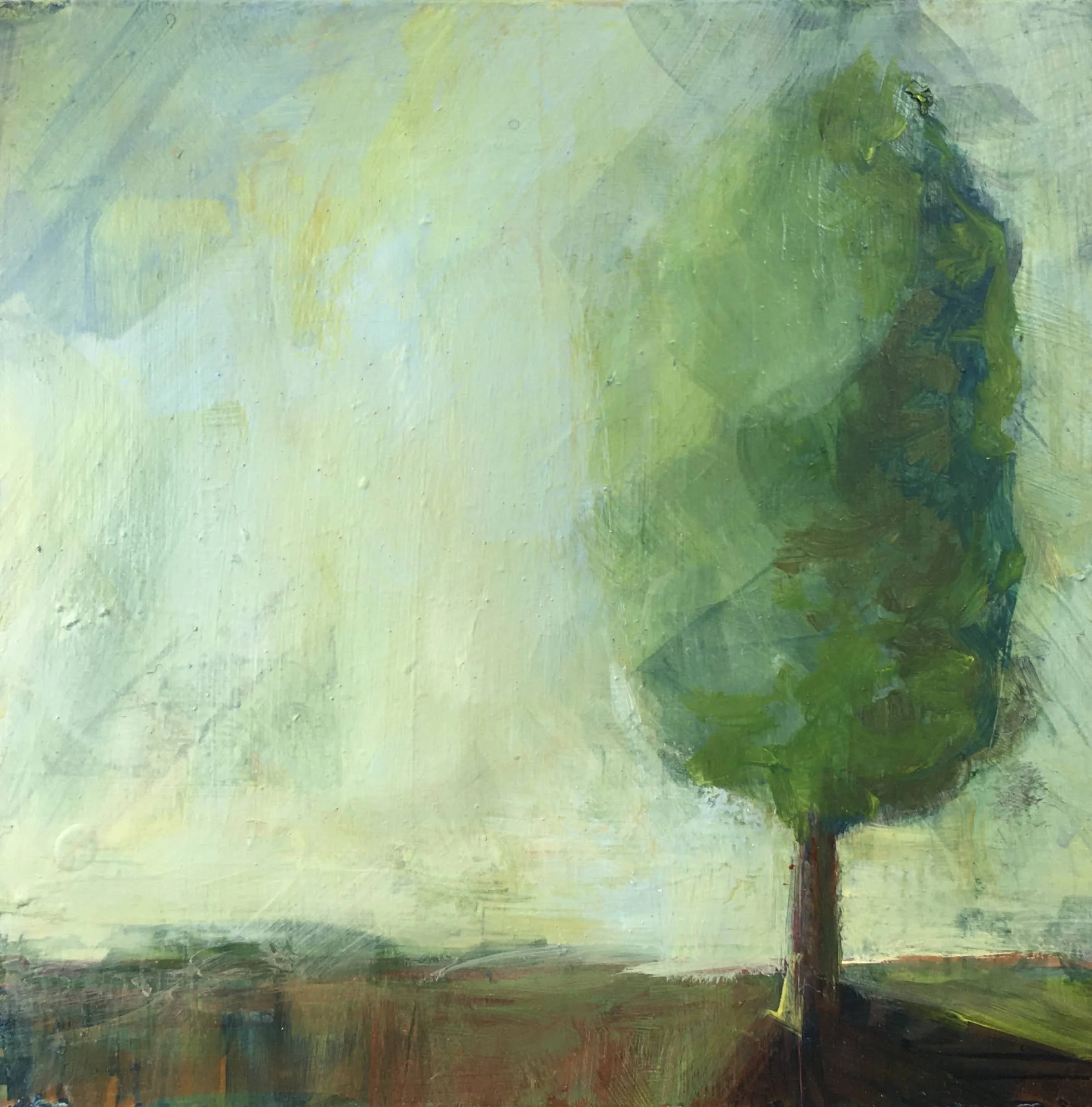
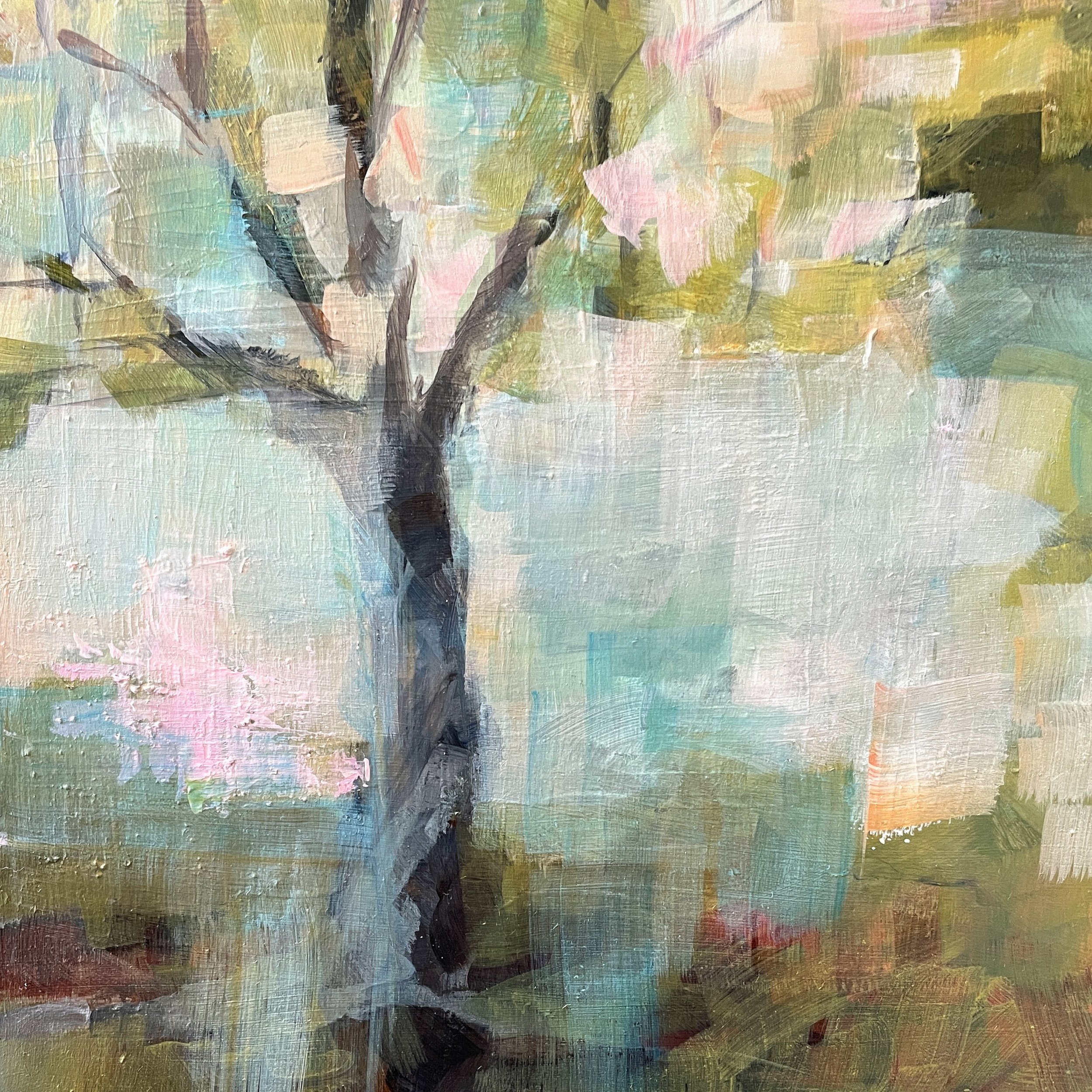
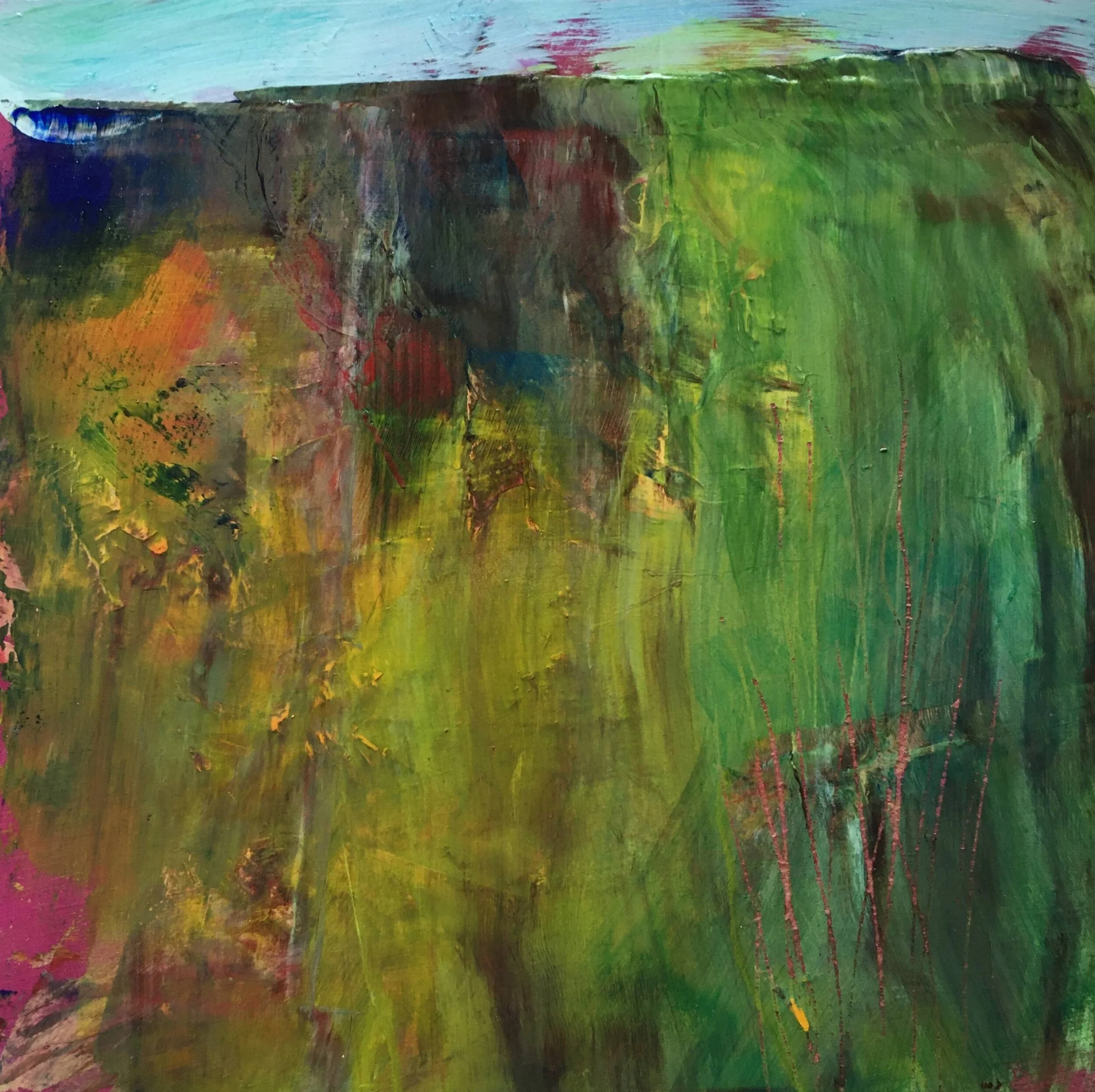
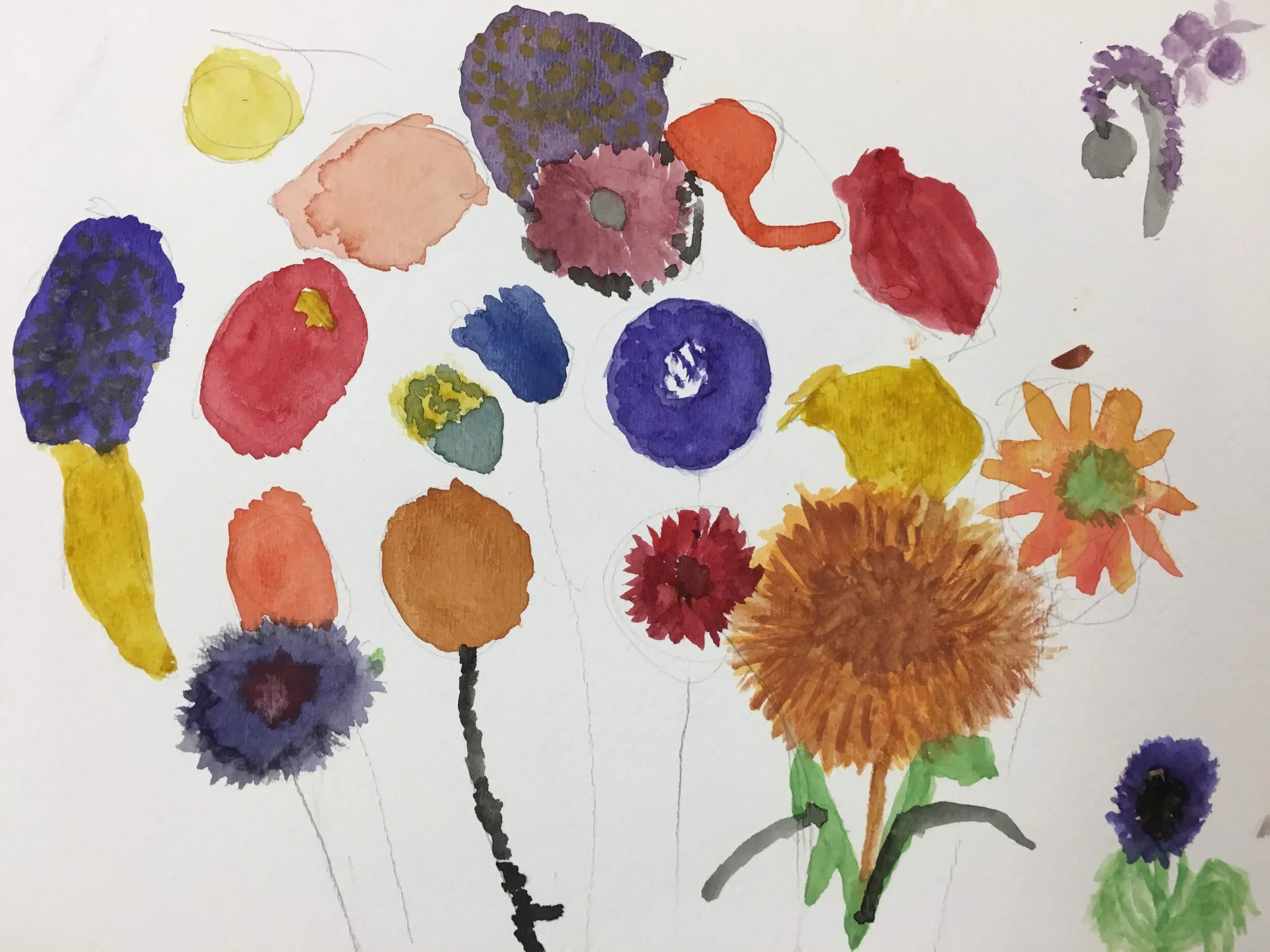
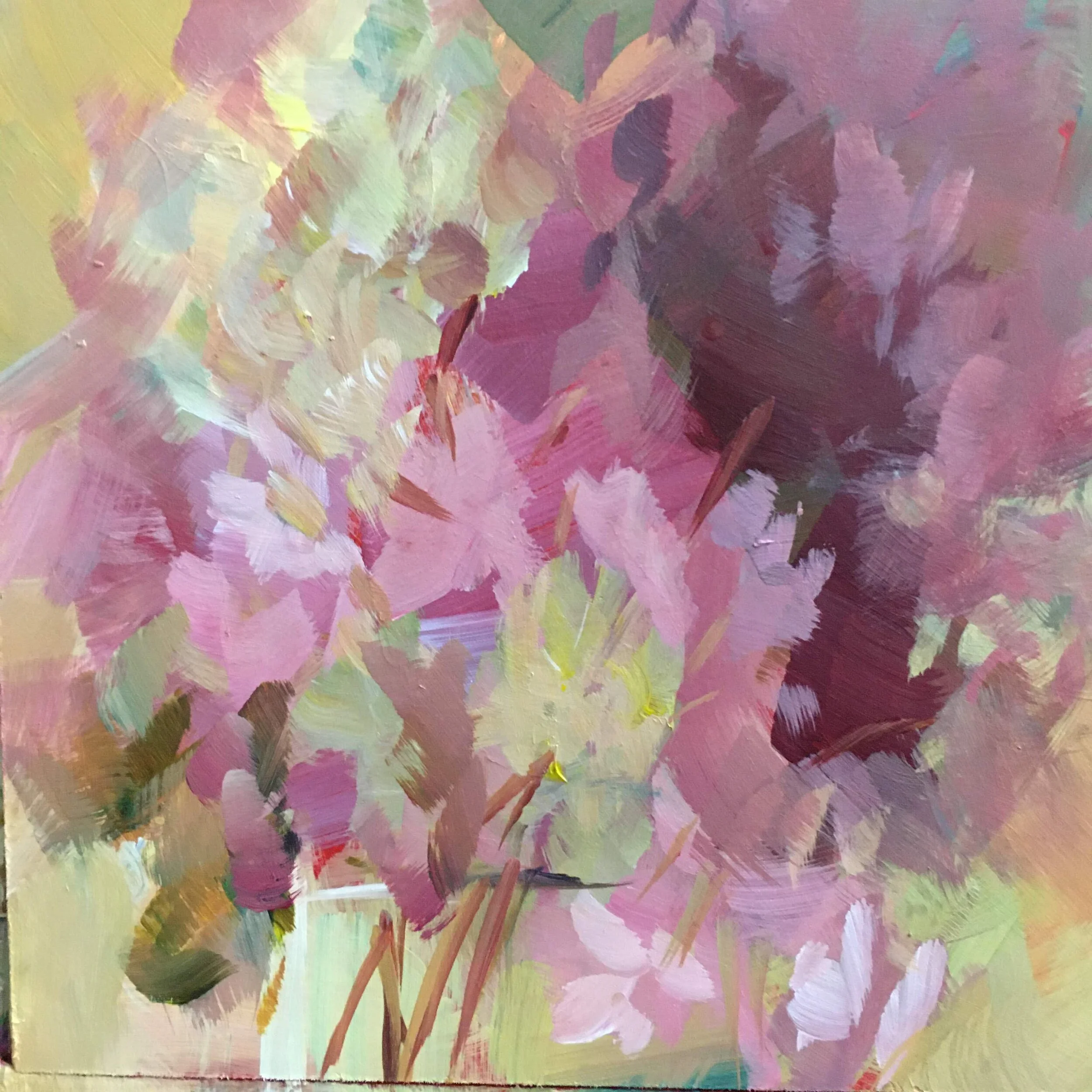
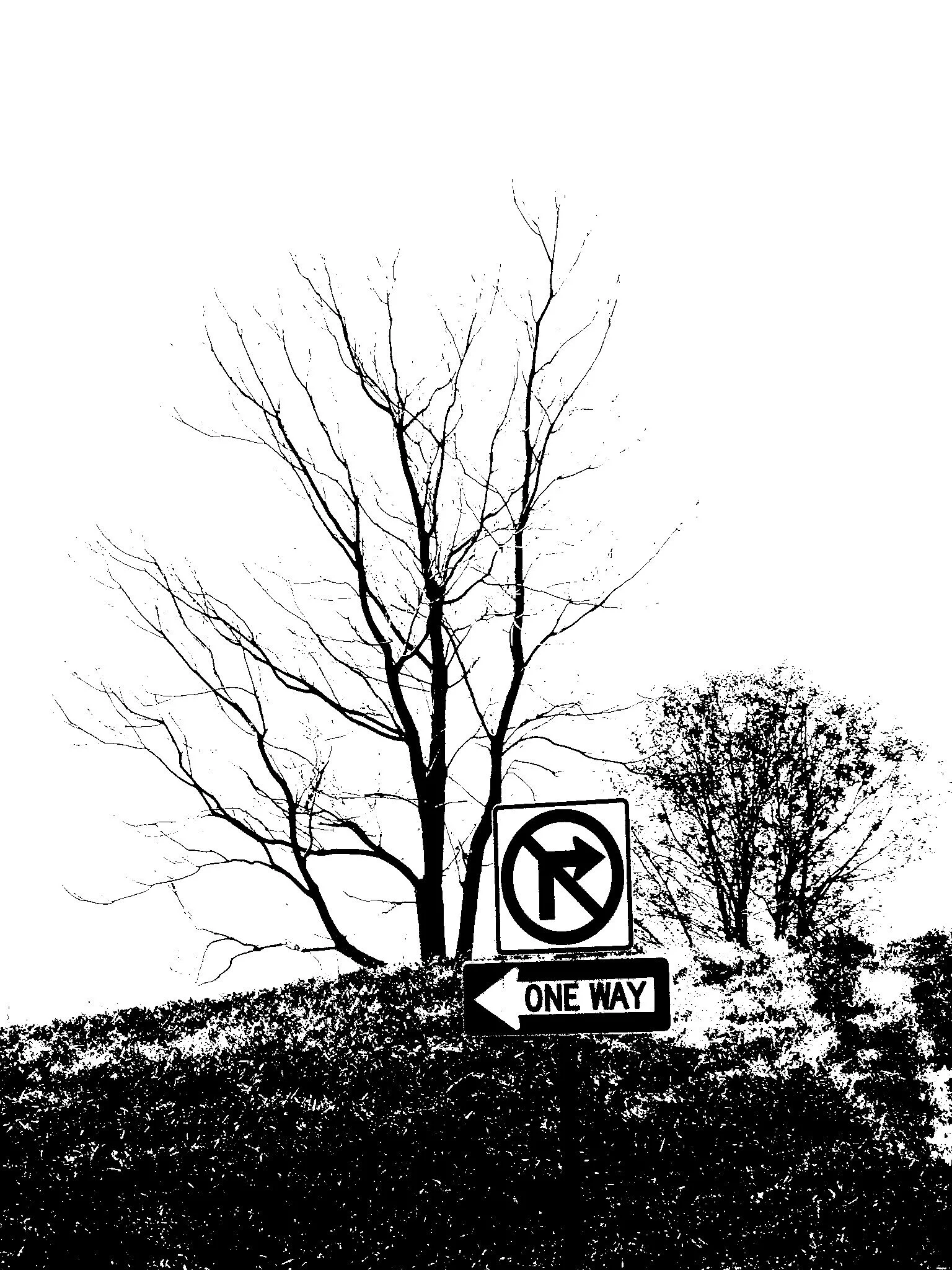
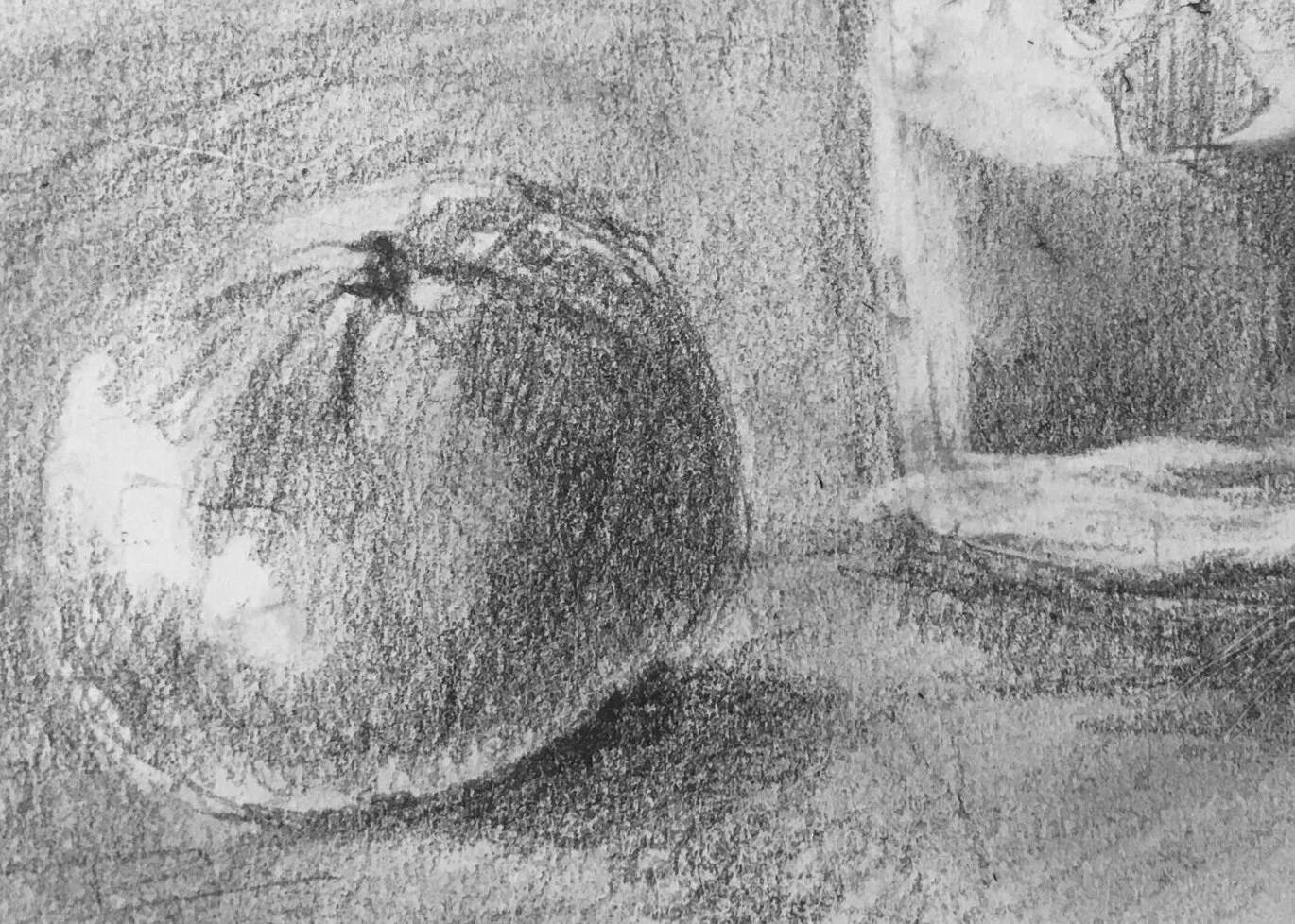
For me, weekly assignments have pushed me into new waters. This month’s brief: Think abstractly. Refine, leave out, simplify. Even tho’ I gave the same advice for years as a teacher, it’s another thing to be the student, and trying to clarify my own thinking. The effort released old memories of swimming lessons (which I hated). For weeks I held onto the pool’s edge. Afraid to get in over my head. Now, the investigation, shared over the internet, buoys me up. Hey. It’s just paint. You don’t drown. Let go. Swim out to into deeper water. Here’s distance the work has traveled this month. (Remember, every one, even the last all-pink image, has layers of “failed” attempts under what you see.)
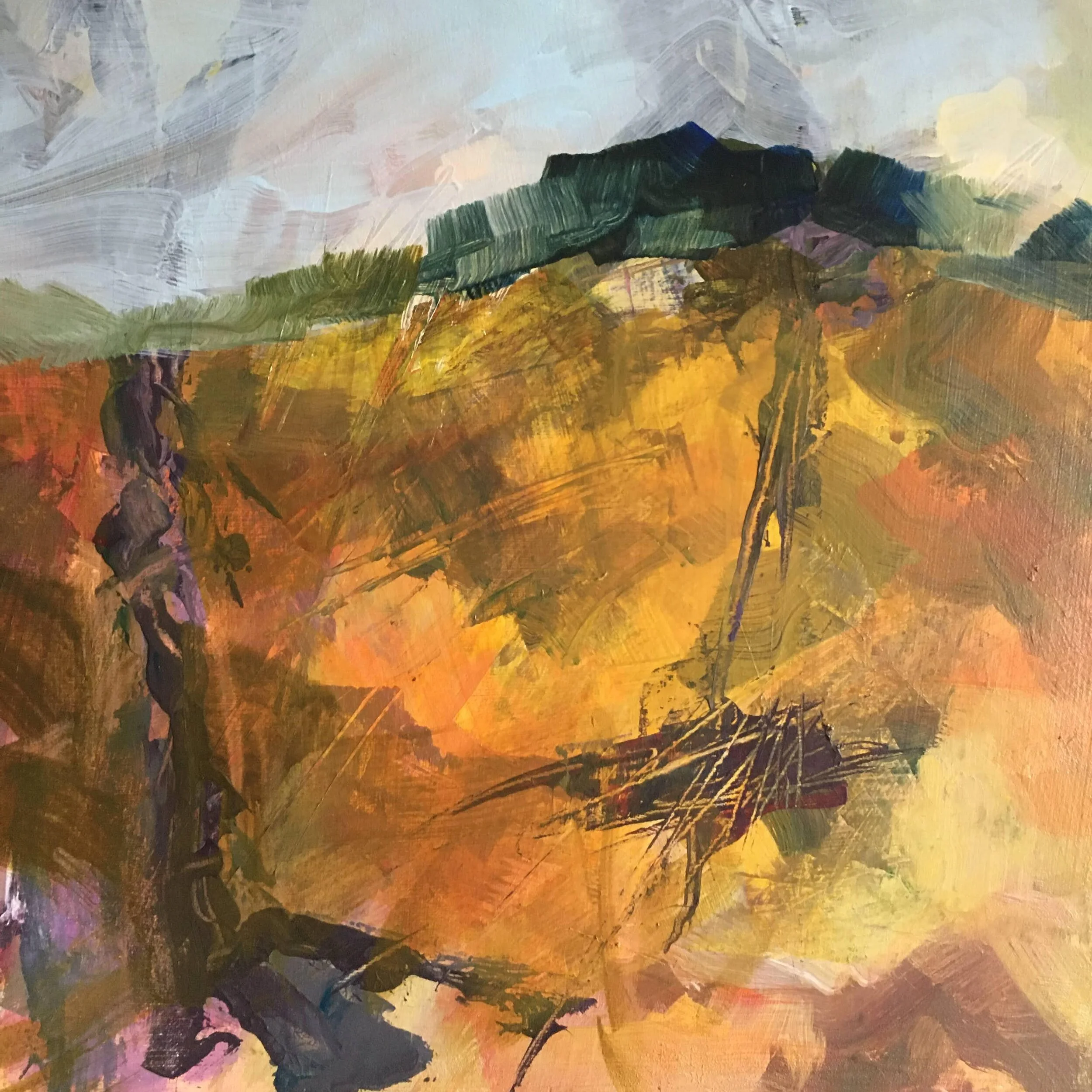
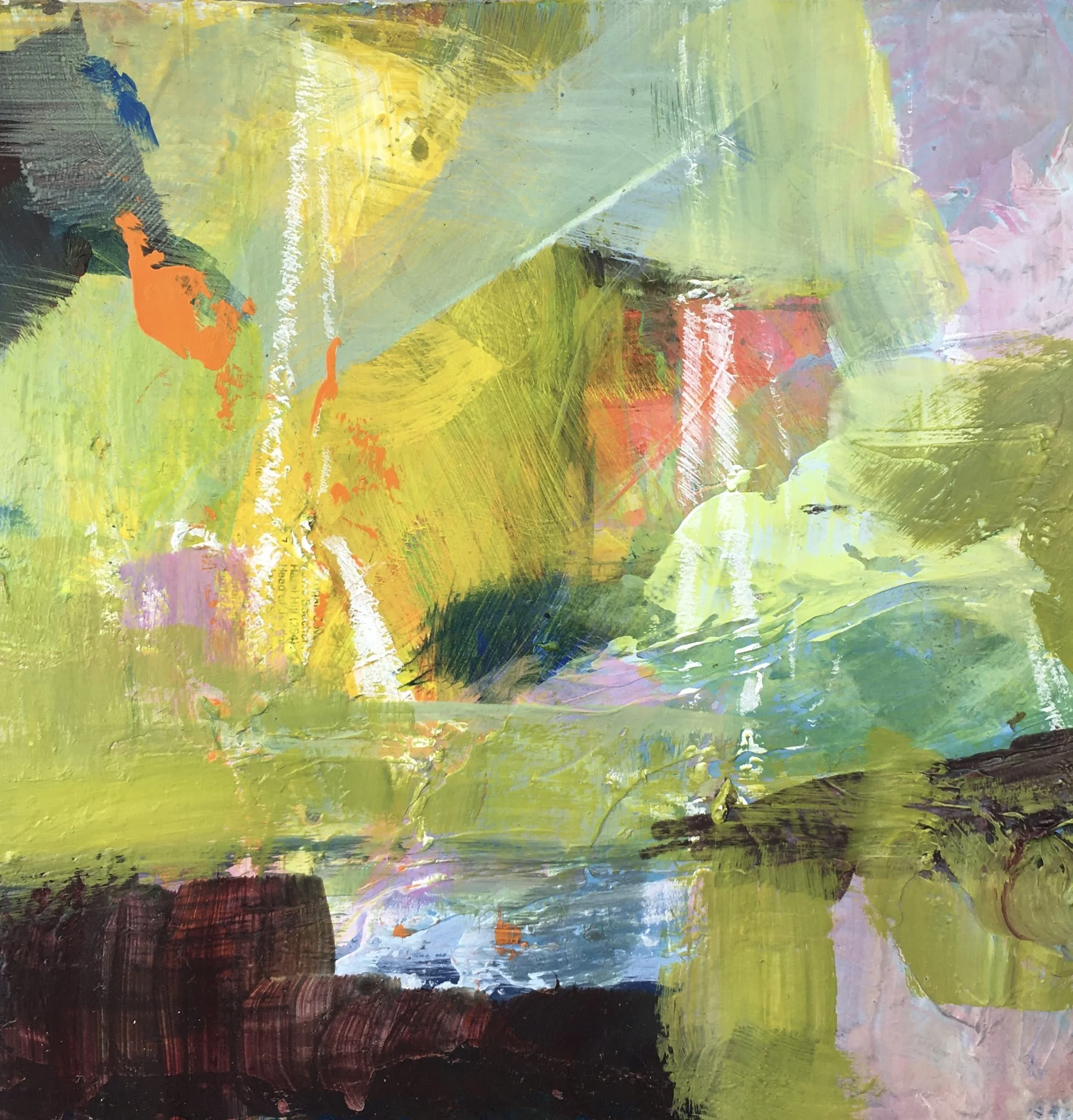

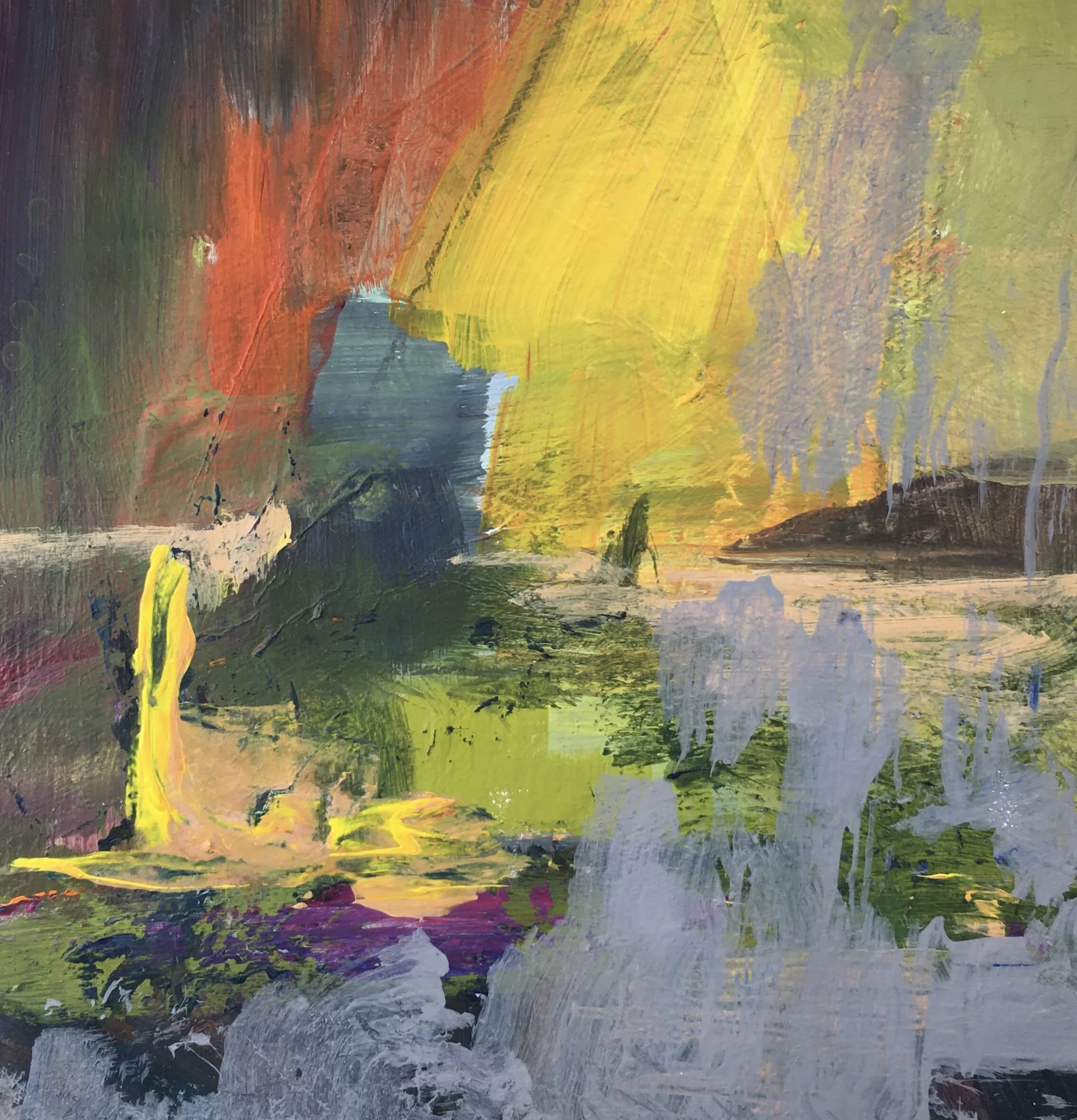
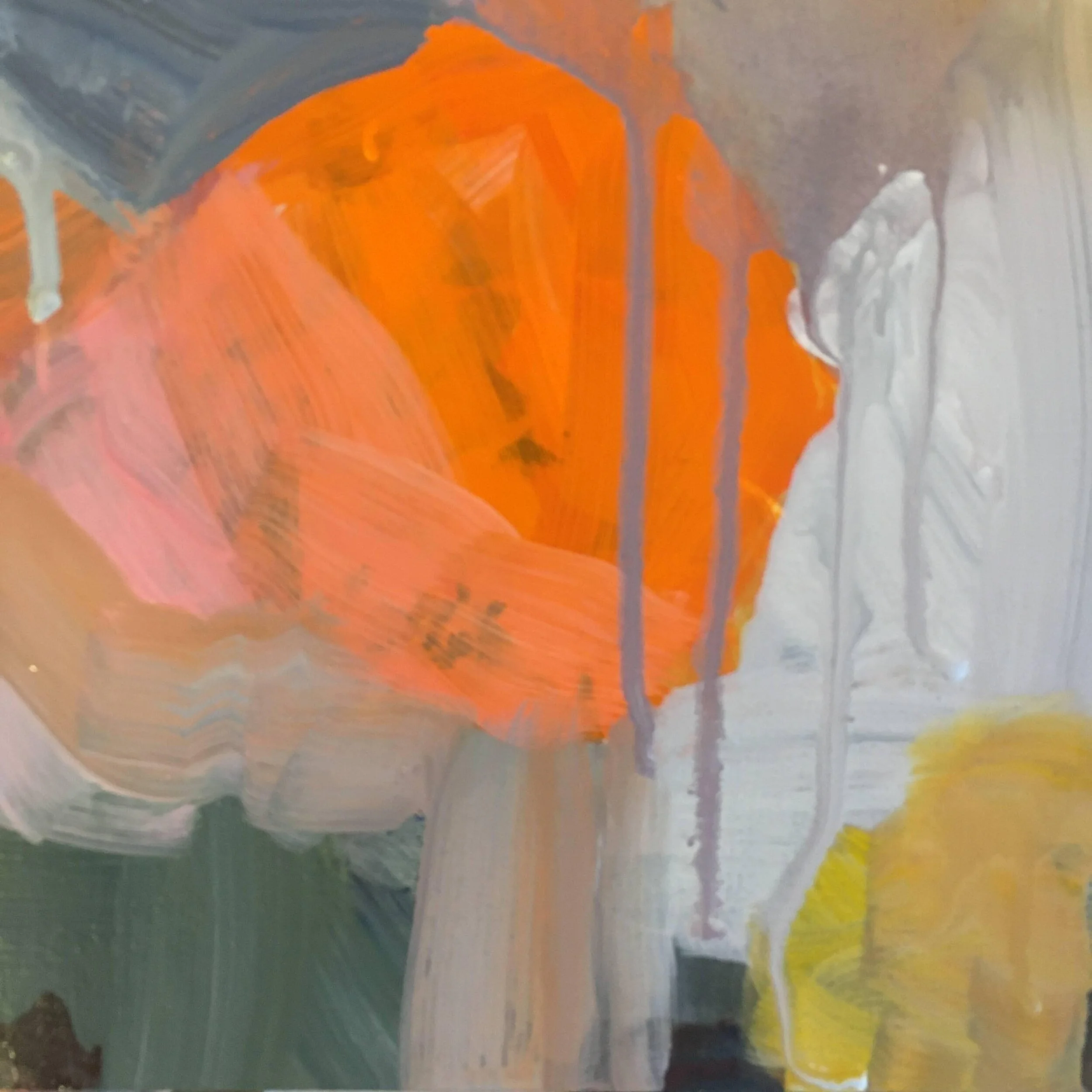

When you need to stop, can’t muster the energy, page through piles of old work. Or pick up a book by an artist you admire. What is the idea that carries you forward? What are you trying to communicate? How can you say that visually - what colors, shapes, lines will you use - so it’s heard? Clear Seeing Place, Brian Rutenberg says that it’s not that less is more (it’s not), but that clarity matters. “If it doesn’t help, take it out. What’s the least amount of information your painting can have and still be a painting?”
Maybe we are all so overwhelmed - by stuff, news, anxiety - we need less. We long for clarity. Looking at contemporary art with my class, I begin to understand that, by its very lack of information, abstraction offers room to breathe. Look for what you can leave out next time, and what you can make bolder, simpler, so your audience can see.
For one abstract artist’s take - on color, media, intention - check out Hyumnee Lee: “Boldness: I like the word. I was once so weak and shy and passive. But I found out I was strong.”

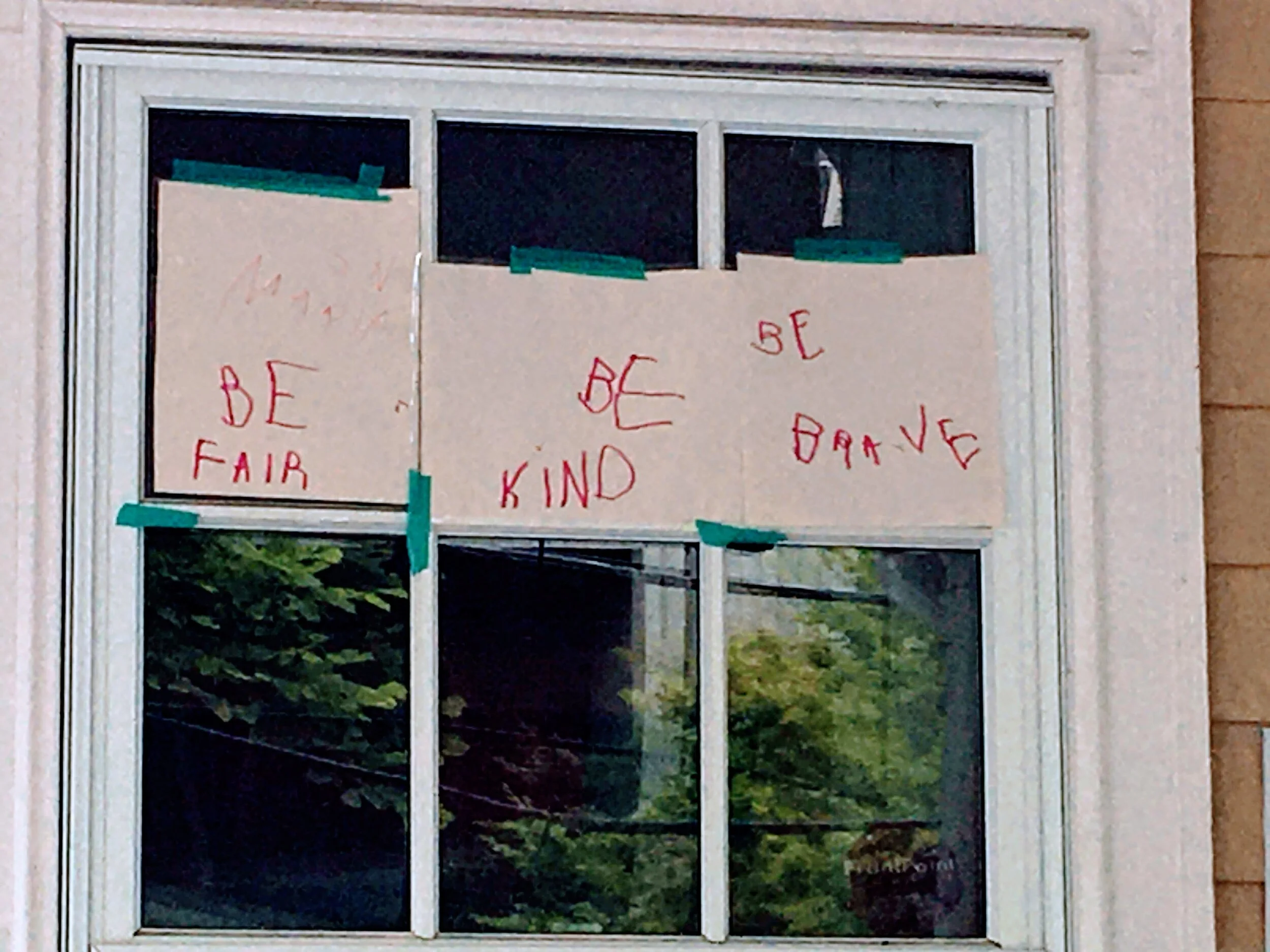
“Sometimes life is hard or sad. But when we manipulate it in a good way, there is a lot of creative things we can find in it.” So. As a local artist put it:
Sign up for art tips and studio news:


When an image grabs you and won’t let go….